Human IL31/IL31RA mRNA Expression by RT-PCR
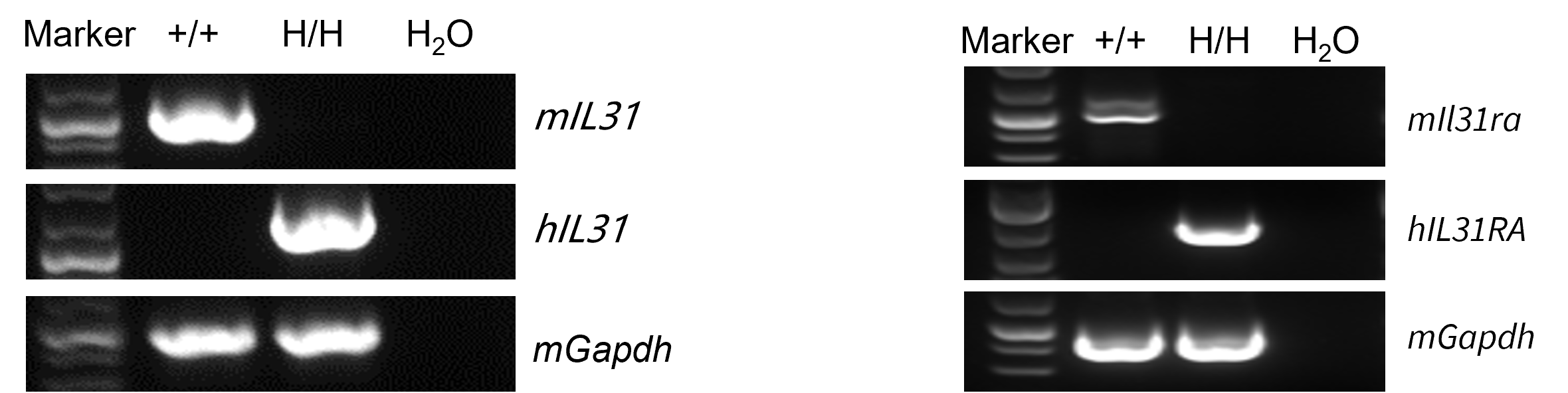
- Human IL31 and IL31RA mRNA were specifically and correctly expressed in B-hIL31/hIL31RA mice
Strain specific analysis of IL31 and IL31RA gene expression in wild-type C57BL/6 mice and homozygous B-hIL31/hIL31RA mice by RT-PCR. Testis was collected from wild-type mice (+/+) and B-hIL31/hIL31RA mice (H/H;H/H). Mouse Il31 and Il31ra mRNA were exclusively detectable in wild-type mice. Human IL31 and IL31RA mRNA were exclusively detectable in homozygous B-hIL31/hIL31RA mice, but not in wild-type mice.
Human OSMR Expression by RT-PCR/WB
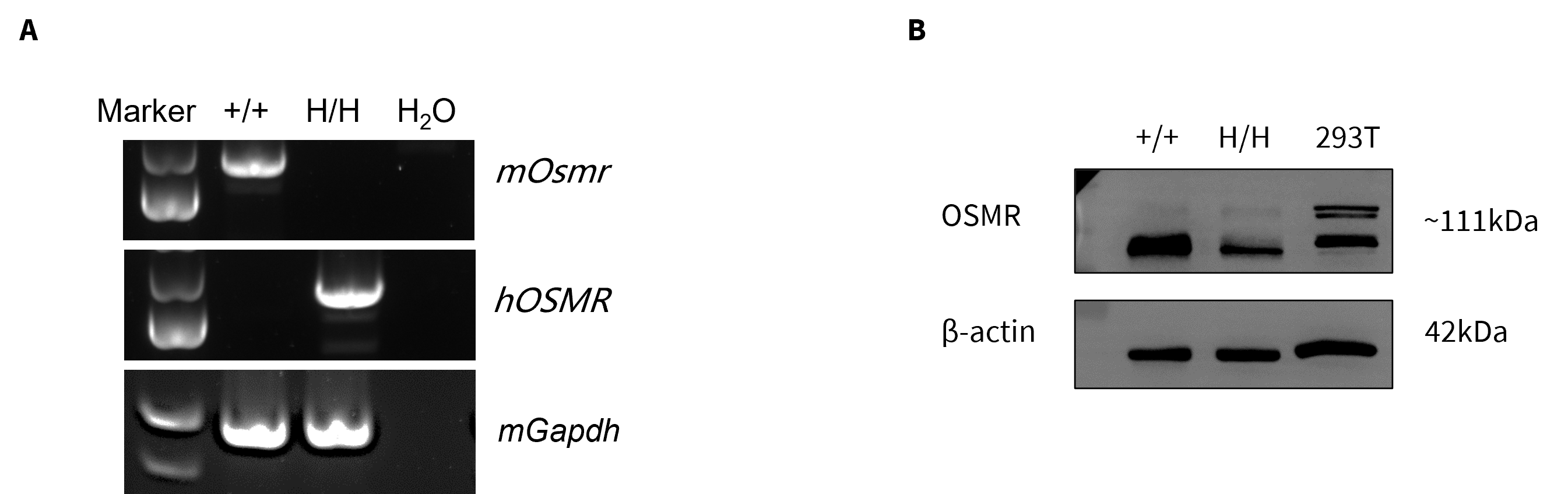
- Human OSMR mRNA was specifically and correctly expressed in B-hOSM/hOSMR mice.
- Human OSMR protein was detected in homozygous B-hOSM/hOSMR mice.
Strain specific analysis of OSMR gene expression in wild-type mice and B-hOSM/hOSMR mice. Kidney was collected from wild-type C57BL/6 mice (+/+) and homozygous B-hOSM/hOSMR mice (H/H;H/H), and analyzed by RT-PCR and western blot. (A) mRNA expression. Mouse Osmr mRNA was exclusively detectable in wild-type mice. Human OSMR mRNA was exclusively detectable in homozygous B-hOSM/hOSMR mice. (B) Protein expression. The OSMR protein were detected both in wild-type mice and homozygous B-hOSM/hOSMR mice. 293T cells were used as positive control.
OSM Protein Expression Analysis
- Mouse OSM was detected exclusively in wild-type C57BL/6 mice.
- Human OSM was detected in homozygous B-hOSM/hOSMR mice, but not in wild-type mice.
Strain specific OSM expression analysis in homozygous B-hOSM/hOSMR mice by ELISA. Spleen were isolated from wild-type C57BL/6 mice (+/+) and homozygous B-hOSM/hOSMR mice (H/H;H/H), and stimulated with anti-mouse CD3 and anti-mouse CD28 antibodies in vitro. Cell culture supernatants were collected and analyzed by species-specific OSM ELISA kit. Mouse OSM was detectable in wild-type mice. Human OSM was exclusively detectable in homozygous B-hOSM/hOSMR mice but not in wild-type mice. Values are expressed as mean ± SEM. ND: not detectable.
Functional Validation
- In B-hOSM/hOSMR mice: Mouse IL6 was induced by human OSM, but not by mouse OSM, and hOSM induced mIL6 secretion can be blocked by anti-hOSMR antibodies (in house).
- In wild-type C57BL/6 mice: Mouse IL6 was induced by mouse OSM, but not by human OSM.
- These results demonstrate species-specific OSM–OSMR signaling and showed that OSMR signaling function was not influenced by gene humanization.
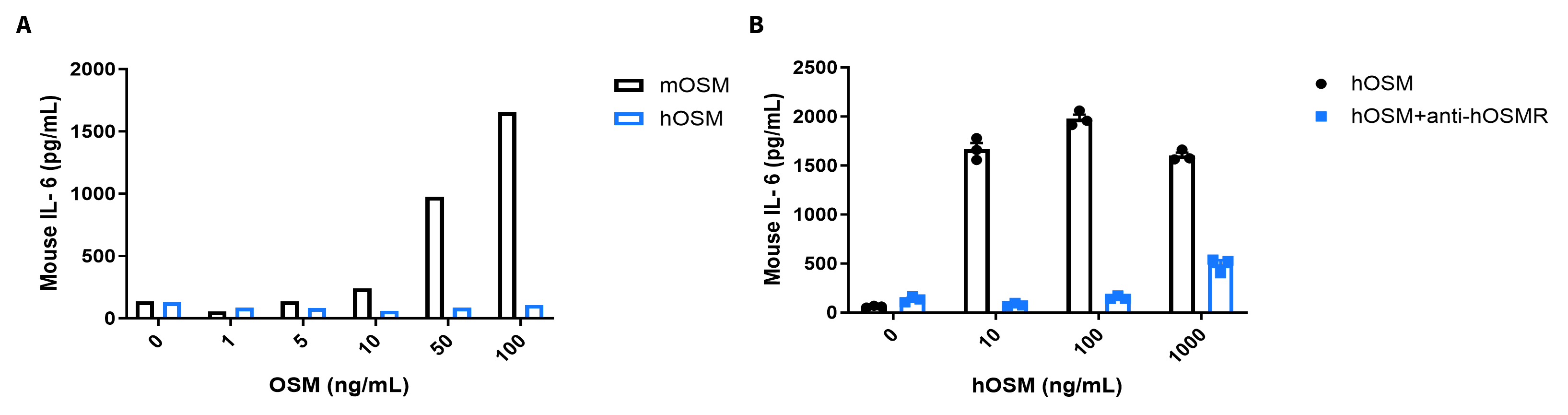
hOSM induced IL-6 secretion is blockade by anti-hOSMR antibody in MEFs of homozygous B-hOSM/hOSMR mice. Mouse embryonic fibroblasts (MEFs) were derived from either C57BL/6 mice or B-hOSM/hOSMR mice, and stimulated with different concentrations of mOSM (0-100 ng/mL) or hOSM (0-1000 ng/mL) for 24h. Supernatants from each well were collected and analyzed for IL-6 expression by ELISA. (A) In the MEFs of C57BL/6 mice, IL-6 can be induced by mOSM in a dose-dependent manner, but not by hOSM. It demonstrates that hOSM can’t be recognized by mouse receptor. (B) In the MEFs of B-hOSM/hOSMR mice, hOSM can induce IL-6 secretion, and the function can be blocked by anti-hOSMR antibodies (in house). Cells were incubated with antibodies (10 μg/mL) for 30 minutes, and stimulated with hOSM. The results show that the OSMR signaling function was not influenced by gene humanization. Values are expressed as mean ± SEM.
- In B-hIL31/hIL31RA/hOSM/hOSMR mice: Mouse IL6 was induced by human OSM, but not by mouse OSM and hOSM induced mIL6 secretion can be blocked by anti-hOSMR antibodies (in house).
- In wild-type C57BL/6 mice: Mouse IL6 was induced by mouse OSM, but not by human OSM.
- These results demonstrate species-specific OSM–OSMR signaling and showed that OSMR signaling function was not influenced by gene humanization.
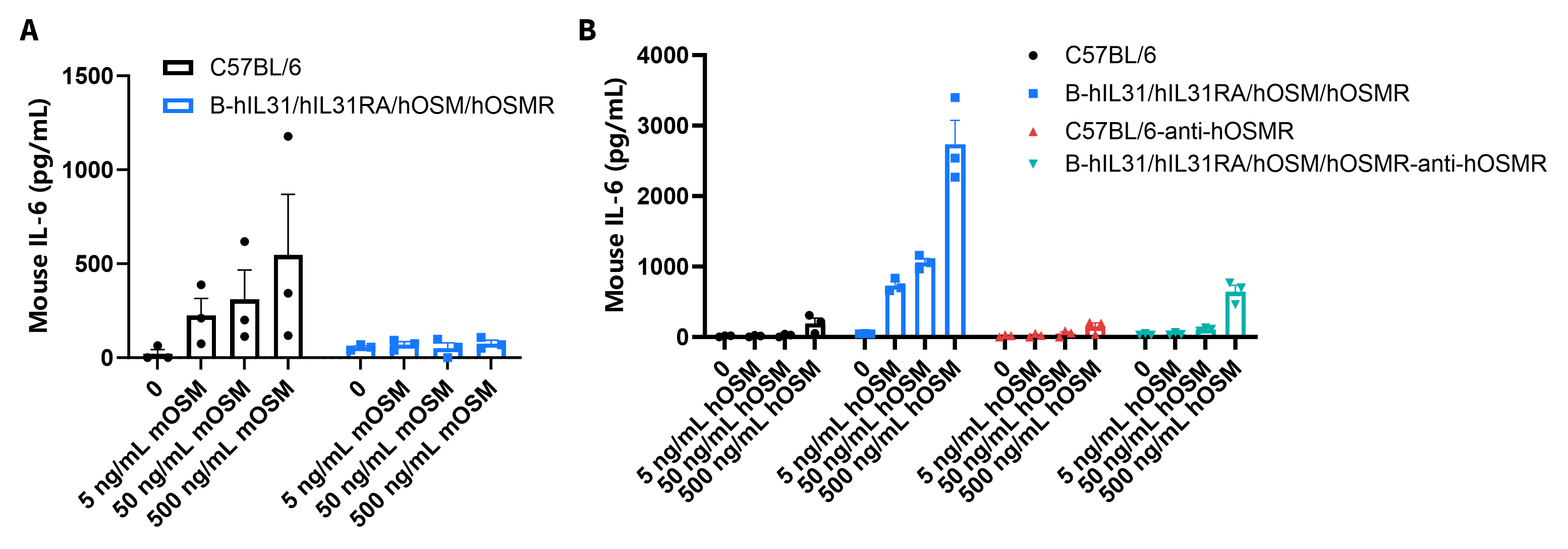
OSM-induced IL-6 is reduced by anti-hOSMR antibody in homozygous B-hIL31/hIL31RA/hOSM/hOSMR mice. Lung fibroblasts derived from either C57BL/6 mice or B-hIL31/hIL31RA/hOSM/hOSMR mice were plated at 15,000 cells/well in 96-well plates and stimulated with indicated concentrations of mOSM or hOSM (0-500 ng/mL) for 24 h, then cell culture supernatants were collected for ELISA analysis of IL-6. (A) rmOSM induced IL-6 expression in wild-type C57BL/6 mice with dose-dependent manner, but not in homozygous mice. (B) rhOSM induced IL-6 expression in homozygous mice with dose-dependent manner, but not in wild-type mice. Meanwhile, the secretion of IL6 can be blocked by anti-hOSMR antibodies (in house). Values are expressed as mean ± SEM.
Analysis of Leukocyte Subpopulations
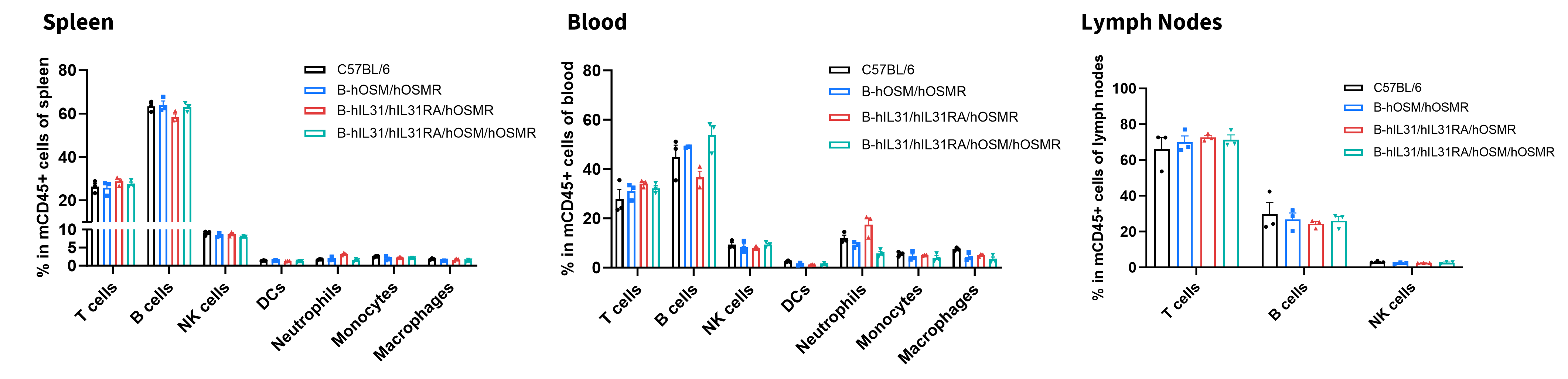
- The percentages of T cells, B cells, NK cells, DCs, neutrophils, monocytes, and macrophages in homozygous B-hIL31/hIL31RA/hOSM/hOSMR mice were similar to those in C57BL/6 mice.
- Humanization of IL31, IL31RA, OSM and OSMR does not affect normal immune cell development or splenic distribution.
Analysis of leukocyte subpopulations by flow cytometry in immune organs and blood. Splenocytes, peripheral blood, and lymph nodes were isolated from female C57BL/6 and B-hIL31/hIL31RA/hOSM/hOSMR mice (female, 6 or 7-week-old, n = 3). Single live cells were gated on the CD45⁺ population and analyzed by flow cytometry as indicated. Values are expressed as mean ± SEM.
Analysis of T Cell Subpopulations
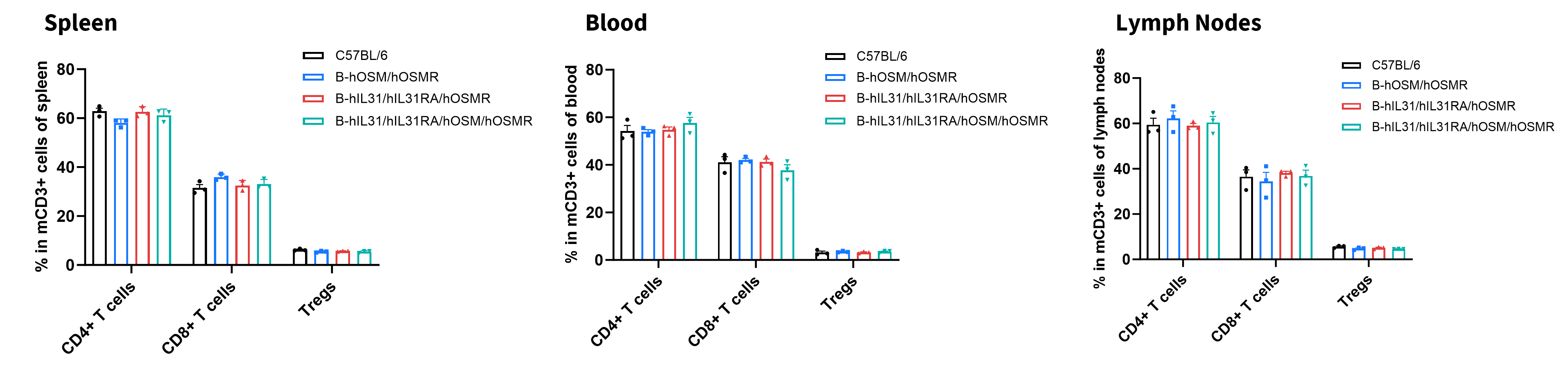
- The proportions of CD4⁺ T cells, CD8⁺ T cells, and Tregs in homozygous B-hIL31/hIL31RA/hOSM/hOSMR mice were comparable to those in C57BL/6 mice.
- Humanization of IL31, IL31RA, OSM and OSMR does not affect normal T cell development, differentiation, or splenic distribution.
Analysis of T-cell subpopulations by flow cytometry in immune organs and blood. Splenocytes, peripheral blood, and lymph nodes were isolated from female C57BL/6 and B-hIL31/hIL31RA/hOSM/hOSMR mice (female, 6 or 7-week-old, n = 3). Single live cells were gated on the CD3⁺ T-cell population and analyzed by flow cytometry as indicated. Values are expressed as mean ± SEM.
Hematology Analysis
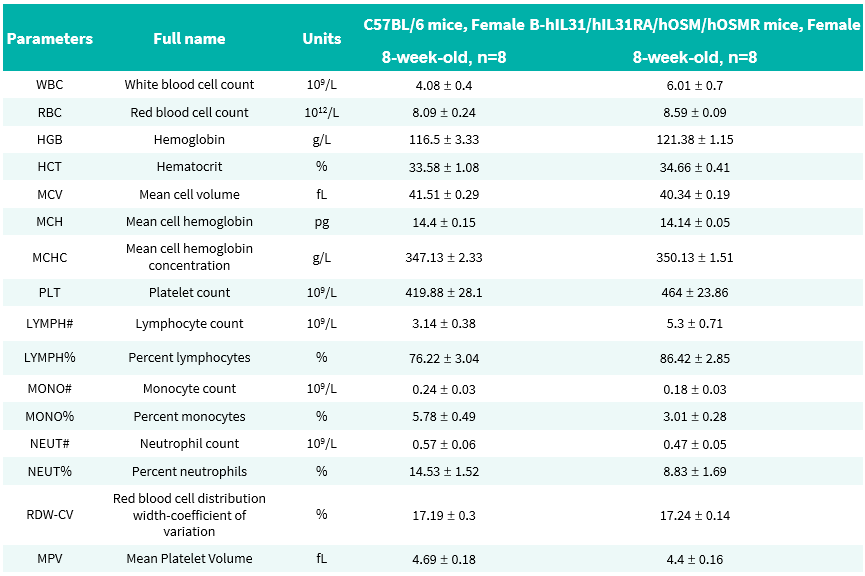
- No significant differences were observed compared with wild-type mice.
Complete blood count (CBC) of B-hIL31/hIL31RA/hOSM/hOSMR mice. Values are expressed as mean ± SD.
Blood Biochemical Analysis
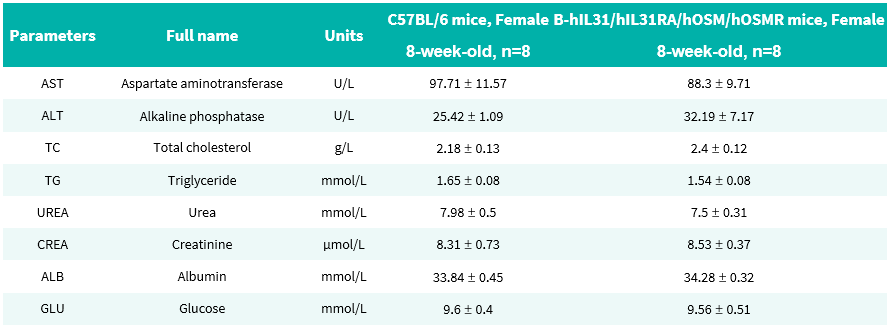
- No significant differences were observed compared with wild-type mice.
Blood biochemical parameters of B-hIL31/hIL31RA/hOSM/hOSMR mice are shown. Values are expressed as mean ± SD.
In Vivo Efficacy of Anti-Human OSMR Antibody in hIL31-Induced Pruritus Model
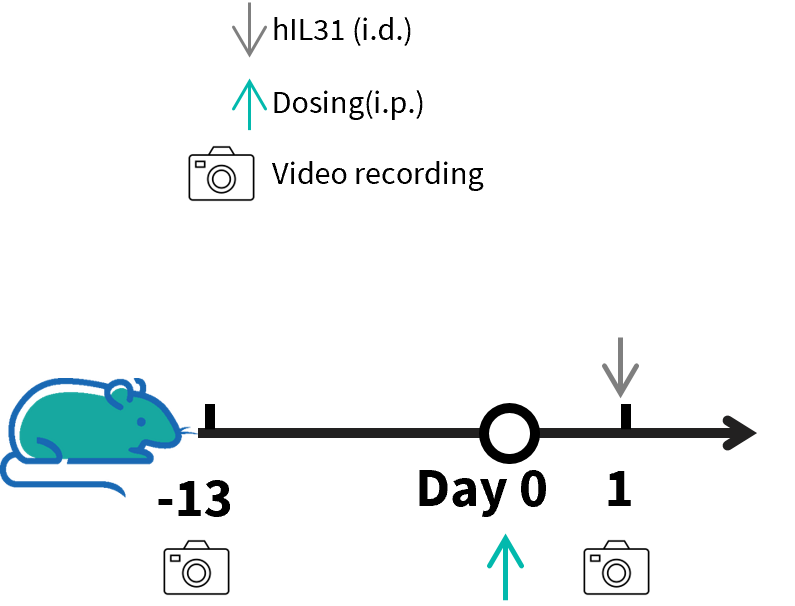
Experimental schedule for the induction of pruritus model and in vivo efficacy of anti-human OSMR antibody in B-hIL31/hIL31RA/hOSM/hOSMR mice. Human IL31 was administered to the B-hIL31/hIL31RA/hOSM/hOSMR mice (female, 15-week-old, 6 mice/group) to induce the scratching behaviors. Meanwhile, the mice were treated with nemolizumab analog, vlxarelimab analog , Ab or PBS (Nemolizumab analog, Vlxarelimab analog and Ab provided by client).
- Anti-hOSMR antibodies attenuate the scratching behaviors in IL31-induced murine pruritus model.

Anti-hOSMR antibodies attenuate the scratching behaviors in IL31-induced murine pruritus model. Human IL31 was administered to the B-hIL31/hIL31RA/hOSM/hOSMR mice (female, 15-week-old, 6 mice/group) to induce the scratching behaviors. Meanwhile, the mice were treated with nemolizumab analog, Vlxarelimab analog, Ab or PBS (Nemolizumab analog, Vlxarelimab analog and Ab provided by client). Scratching behavior was recorded on day -13 (A), day 1 (B).Summary of the mouse Itching frequency in different groups shown in figure (C). As shown in figure C, IL31-treated mice show significantly increased scratching bouts. In the Vlxarelimab analog and Ab treatment group, blockade of IL-31 signaling with anti-hOSMR antibody and Ab significantly attenuates scratching behaviors on day 1. Values are expressed as mean ± SEM. Significance was determined by the two way ANOVA. (*P < 0.05, **P < 0.01, ***P < 0.0001, ns: not significant). Note: This experiment is a collaboration with the client.
* When publishing results obtained using this animal model, please acknowledge the source as follows: The animal model [B-hIL31/hIL31RA/hOSM/hOSMR mice] (Cat# 112647) was purchased from Biocytogen.