mRNA Expression Analysis
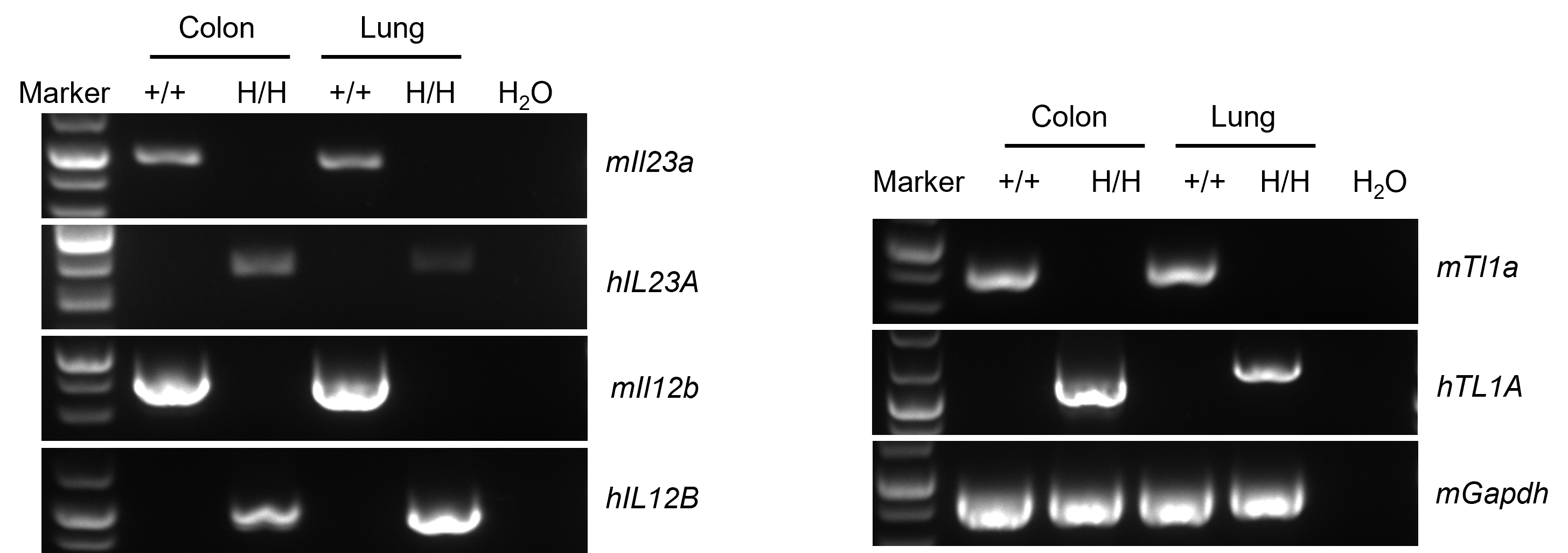
- Human TL1A, IL23A, and IL12B mRNA were specifically and correctly expressed in B-hTL1A/hIL23A/hIL12B mice.
Species specific analysis of TL1A, IL23A and IL12B gene expression in wild-type C57BL/6 mice and homozygous B-hTL1A/hIL23A/hIL12B mice by RT-PCR. Colon and lung were collected from wild-type C57BL/6 mice (+/+) and homozygous B-hTL1A/hIL23A/hIL12B mice (H/H;H/H;H/H). Mouse Tl1a, Il23a and Il12b mRNA were detectable only in wild-type C57BL/6 mice. Human TL1A, IL23A, and IL12B mRNA were detectable only in homozygous B-hTL1A/hIL23A/hIL12B mice, but not in wild-type C57BL/6 mice.
Soluble TL1A Protein Expression Analysis
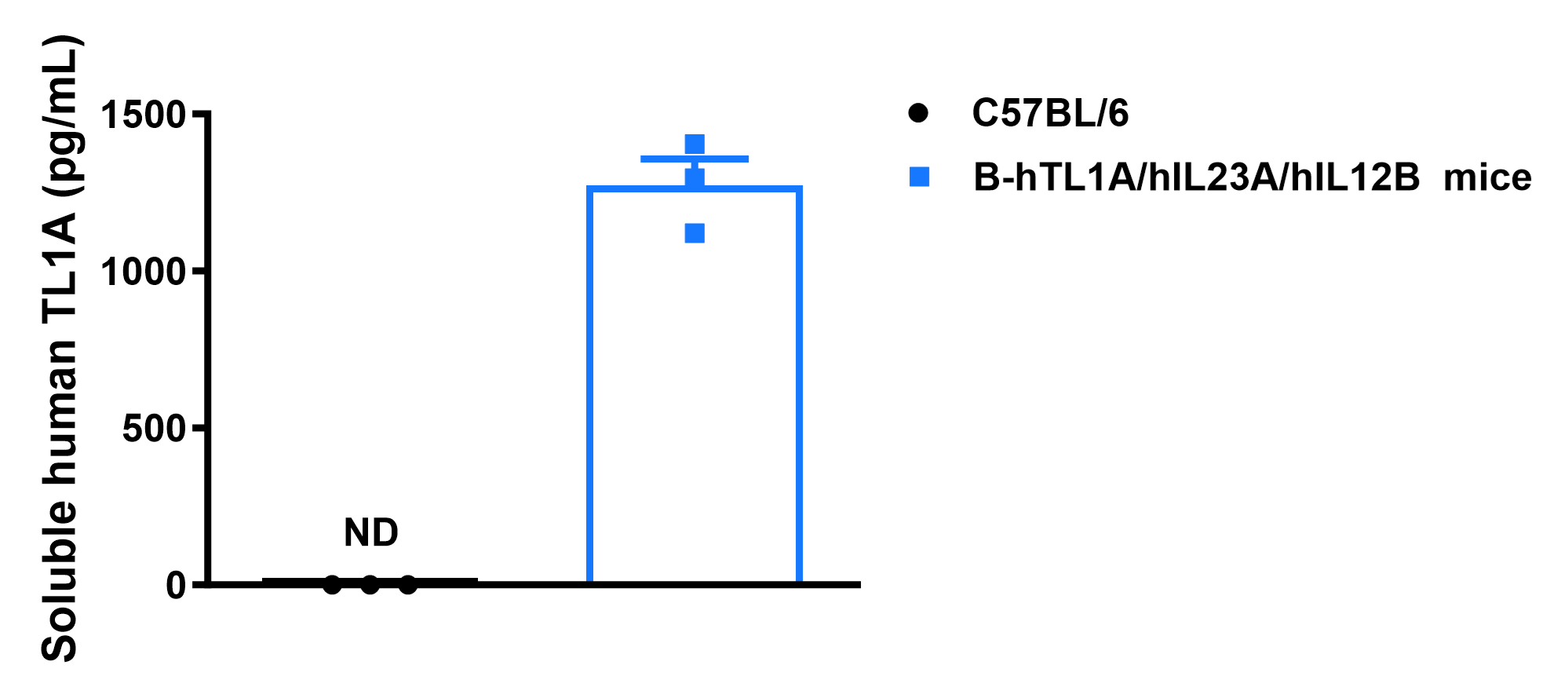
- Soluble human TL1A was exclusively detectable in homozygous B-hTL1A/hIL23A/hIL12B mice but not wild-type C57BL/6 mice.
Soluble TL1A expression analysis in B-hTL1A/hIL23A/hIL12B mice by ELISA. Bone marrow derived dendritic cells were produced by culturing the bone marrow from wild-type C57BL/6 mice and homozygous B-hTL1A/hIL23A/hIL12B mice (female, 9-week-old, n=3), which were stimulated with LPS in vitro. After stimulation, the supernatants were collected and the level of soluble TL1A was analyzed by ELISA. Soluble human TL1A was exclusively detectable in homozygous B-hTL1A/hIL23A/hIL12B mice, but not in wild-type C57BL/6 mice. Values are expressed as mean ± SEM. ND: not detectable.
IL23 Protein Expression Analysis
- Human IL23 was exclusively detectable in homozygous B-hTL1A/hIL23A/hIL12B mice but not wild-type C57BL/6 mice.
Strain specific IL23 expression analysis in wild-type C57BL/6 mice and homozygous humanized B-hTL1A/hIL23A/hIL12B mice by ELISA. Bone marrow derived dendritic cells were produced by culturing the bone marrow from wild-type C57BL/6 mice and homozygous B-hTL1A/hIL23A/hIL12B mice (female, 6-week-old, n=3), which were stimulated with LPS in vitro. After stimulation, the supernatants were collected and the levels of mouse and human IL23 were analyzed by ELISA (R&D, M2300; R&D, D2300B). Mouse IL23 was only detectable in wild-type C57BL/6 mice. Human IL23 was exclusively detectable in homozygous B-hTL1A/hIL23A/hIL12B mice. Values are expressed as mean ± SEM. ND: not detectable.
Analysis of Leukocyte Subpopulations
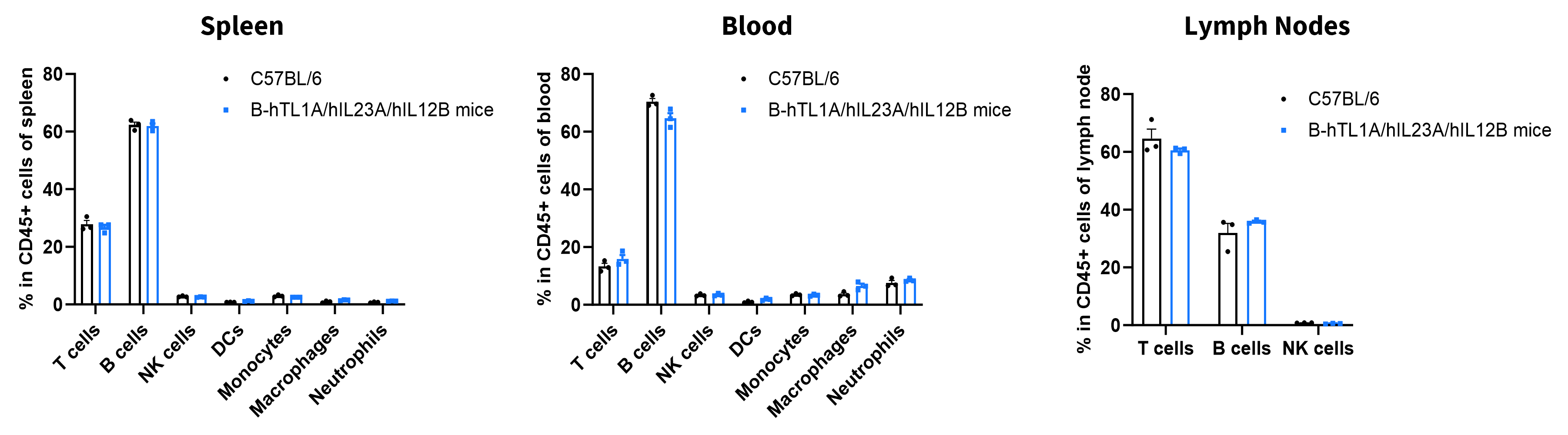
- The percentages of T cells, B cells, NK cells, DCs, monocytes, macrophages, and neutrophils in homozygous B-hTL1A/hIL23A/hIL12B mice were similar to those in C57BL/6 mice.
- Humanization of TL1A, IL23A, and IL12B do not affect normal immune cell development or splenic distribution.
Analysis of leukocyte subpopulations by flow cytometry in immune organs and blood. Splenocytes, peripheral blood, and lymph nodes were isolated from female C57BL/6 and B-hTL1A/hIL23A/hIL12B mice (female, 7-week-old, n = 3). Single live cells were gated on the CD45⁺ population and analyzed by flow cytometry as indicated. Values are expressed as mean ± SEM.
Analysis of T Cell Subpopulations
- The proportions of CD4⁺ T cells, CD8⁺ T cells, and Tregs in homozygous B-hTL1A/hIL23A/hIL12B mice were comparable to those in C57BL/6 mice.
- Humanization of TL1A, IL23A, and IL12B do not affect normal T cell development, differentiation, or splenic distribution.
Analysis of T-cell subpopulations by flow cytometry in immune organs and blood. Splenocytes, peripheral blood, and lymph nodes were isolated from female C57BL/6 and B-hTL1A/hIL23A/hIL12B mice (female, 7-week-old, n = 3). Single live cells were gated on the CD3⁺ T-cell population and analyzed by flow cytometry as indicated. Values are expressed as mean ± SEM.
Growth Curve
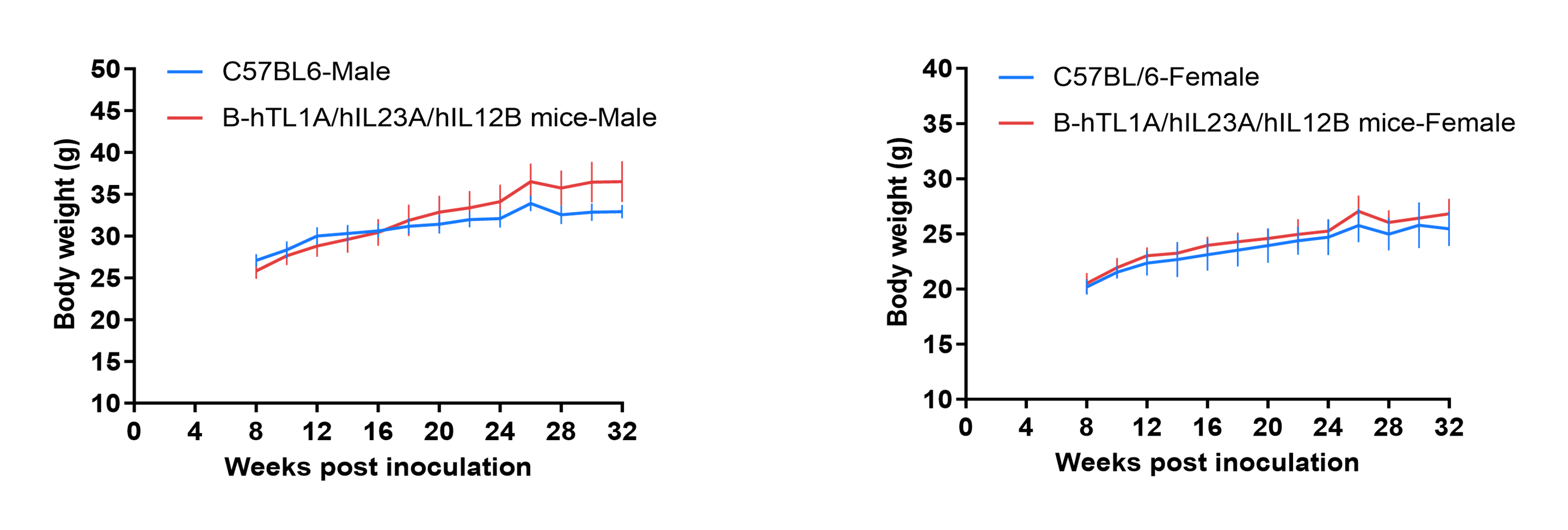
Growth curve of wild-type C57BL/6 and B-hTL1A/hIL23A/hIL12B mice. Eight-week-old mice were grouped by sex (10 males and 10 females). Body weight was measured on the same day of every two week, until 32 weeks. The minimum and maximum body weights shown in the table were calculated from the mean ± SD. The growth curve of the B-hTL1A/hIL23A/hIL12B mice was similar to the growth curve of C57BL/6 mice.
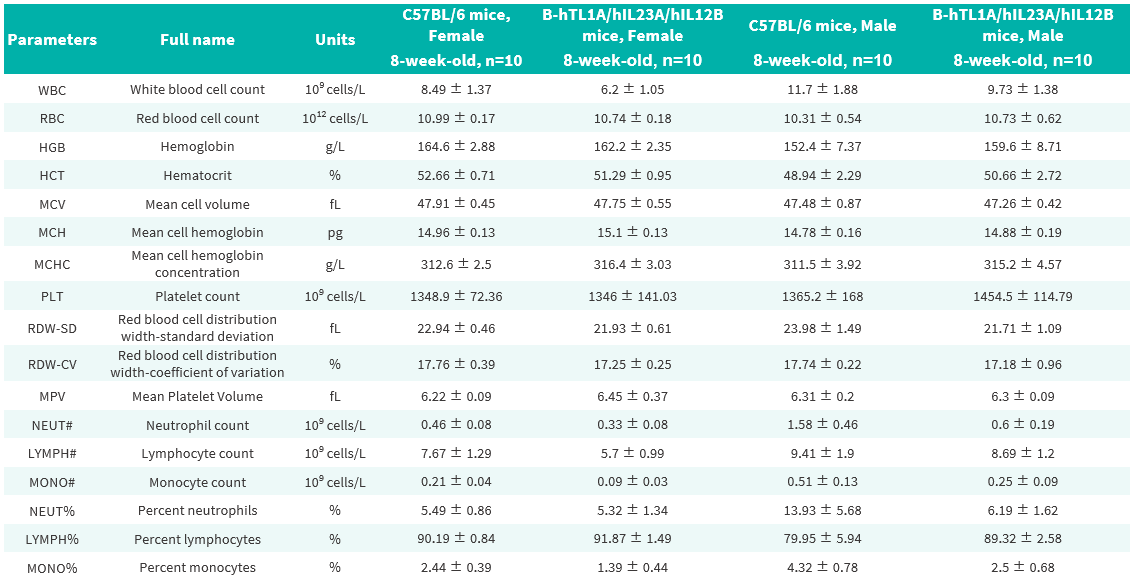
Hematology Analysis-8-Week-Old
- No significant differences were observed compared with wild-type mice.
Complete blood count (CBC) of B-hTL1A/hIL23A/hIL12B mice. Values are expressed as mean ± SD.
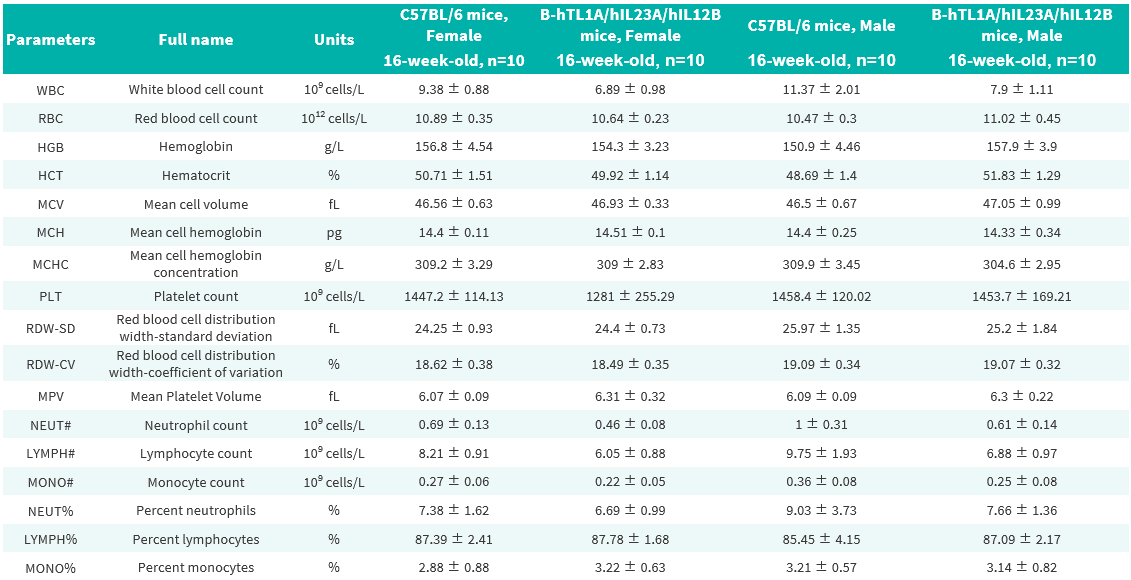
Hematology Analysis-16-Week-Old
- No significant differences were observed compared with wild-type mice.
Complete blood count (CBC) of B-hTL1A/hIL23A/hIL12B mice. Values are expressed as mean ± SD.
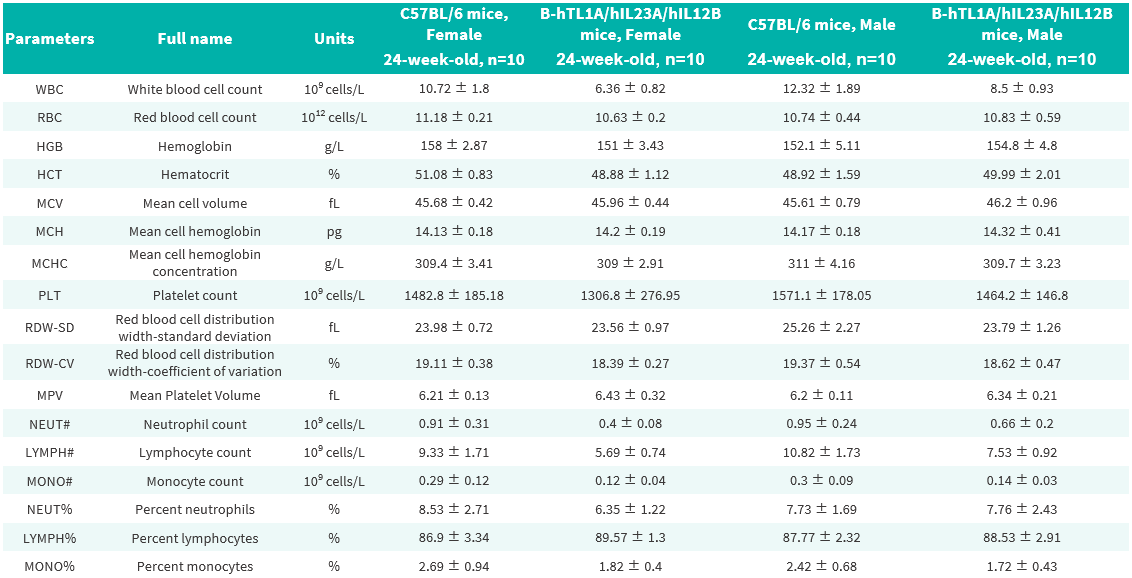
Hematology Analysis-24-Week-Old
- No significant differences were observed compared with wild-type mice.
Complete blood count (CBC) of B-hTL1A/hIL23A/hIL12B mice. Values are expressed as mean ± SD.
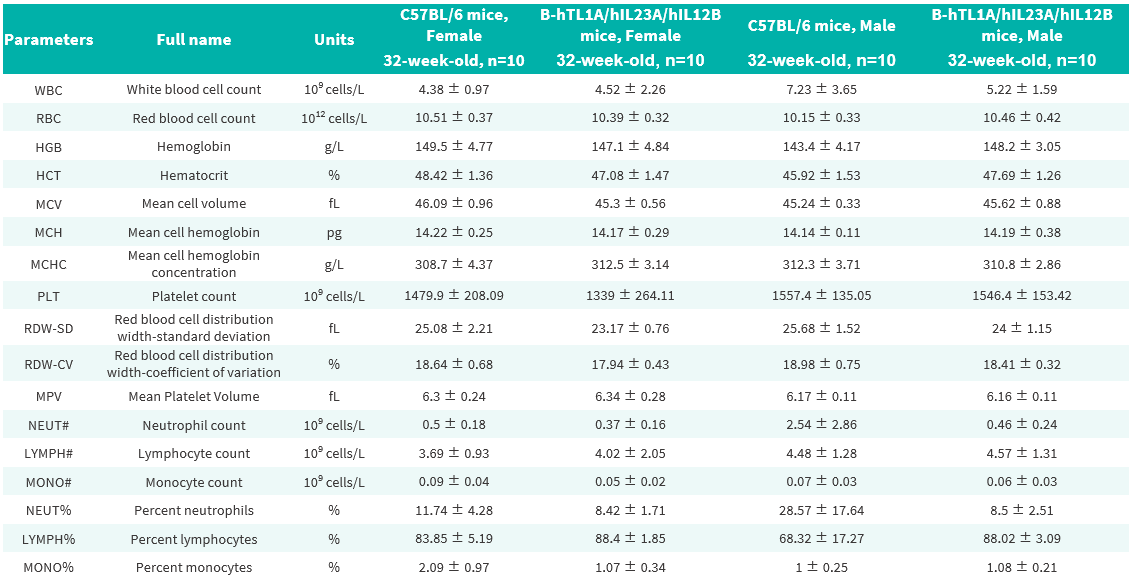
Hematology Analysis-32-Week-Old
- No significant differences were observed compared with wild-type mice.
Complete blood count (CBC) of B-hTL1A/hIL23A/hIL12B mice. Values are expressed as mean ± SD.
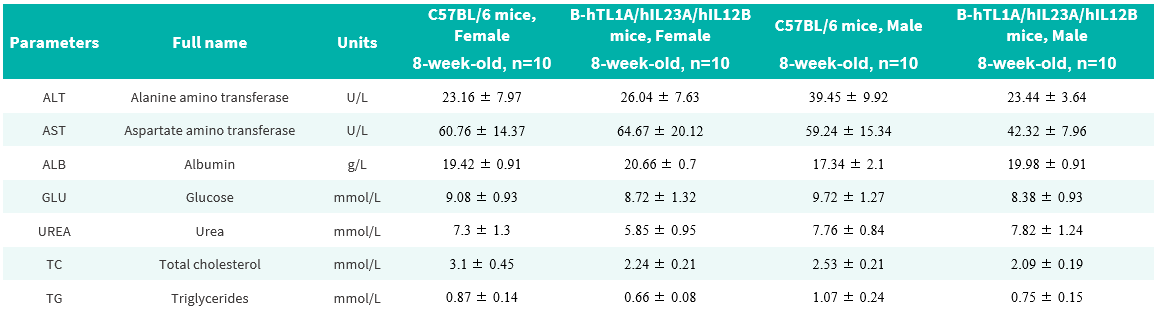
Blood Biochemical Analysis-8-Week-Old
- No significant differences were observed compared with wild-type mice.
Blood biochemical parameters of B-hTL1A/hIL23A/hIL12B mice are shown. Values are expressed as mean ± SD.
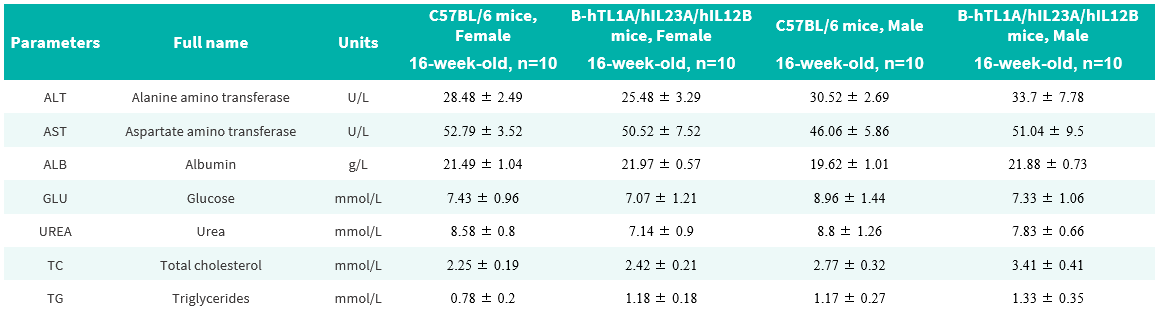
Blood Biochemical Analysis-16-Week-Old
- No significant differences were observed compared with wild-type mice.
Blood biochemical parameters of B-hTL1A/hIL23A/hIL12B mice are shown. Values are expressed as mean ± SD.
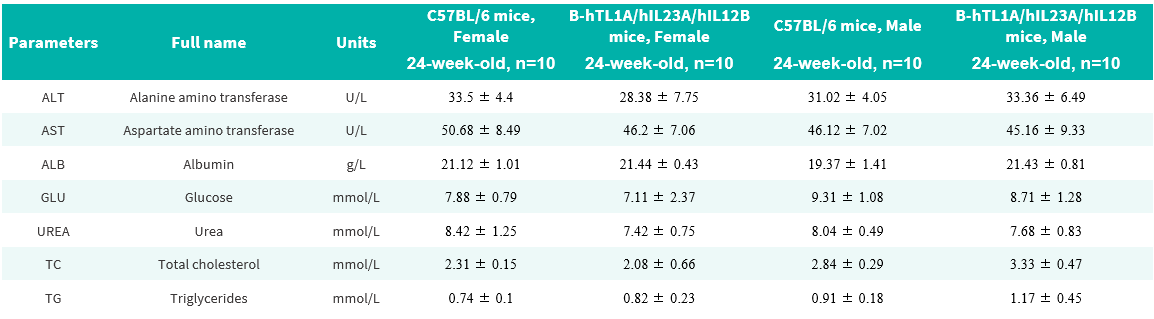
Blood Biochemical Analysis-24-Week-Old
- No significant differences were observed compared with wild-type mice.
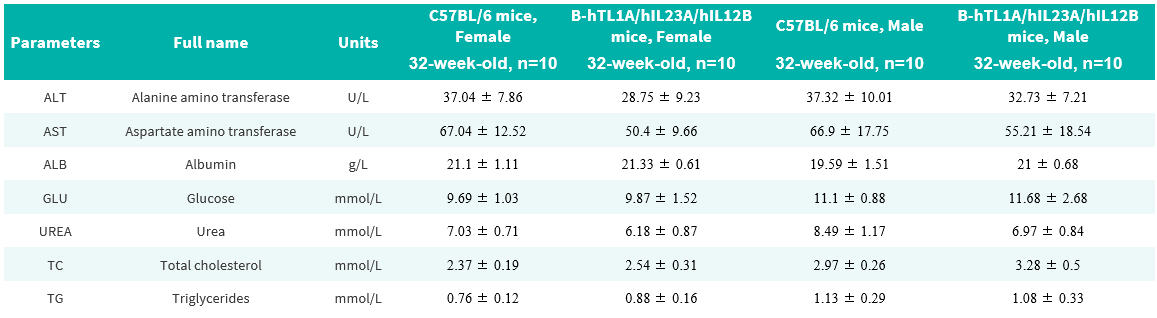
Blood biochemical parameters of B-hTL1A/hIL23A/hIL12B mice are shown. Values are expressed as mean ± SD.
Blood Biochemical Analysis-32-Week-Old
- No significant differences were observed compared with wild-type mice.
Blood biochemical parameters of B-hTL1A/hIL23A/hIL12B mice are shown. Values are expressed as mean ± SD.
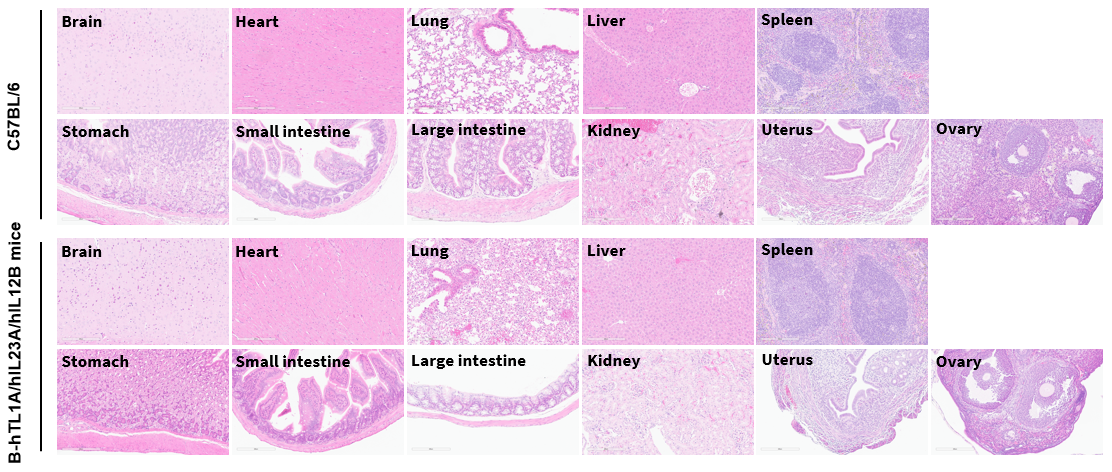
Histopathological Analysis-Female Organs
- No obvious abnormalities were observed in all of the organs (brain, heart, lung, liver, spleen, stomach, small intestine, large intestine, kidney, uterus and ovary).
Histopathological analysis of organs in female B-hTL1A/hIL23A/hIL12B mice. Major organs from B-hTL1A/hIL23A/hIL12B mice were collected at 32 weeks of age and analyzed by H&E staining (female, n = 3).
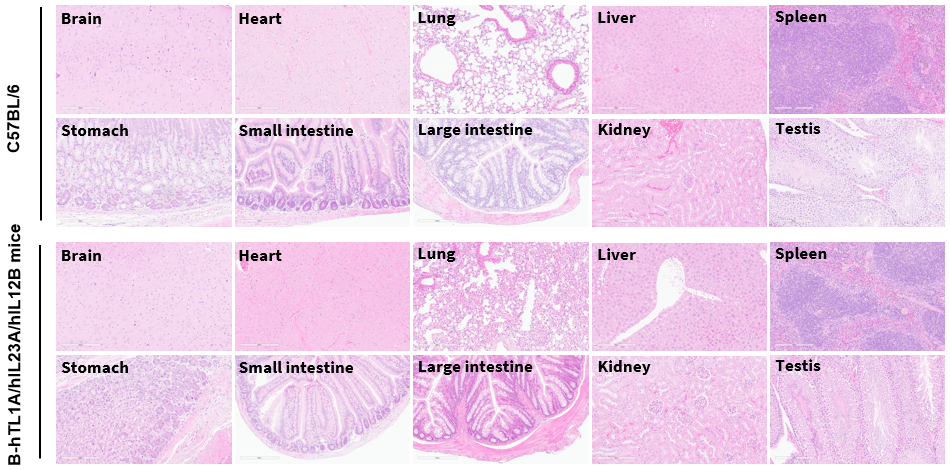
Histopathological Analysis-Male Organs
- No obvious abnormalities were found in all of the organs (brain, heart, lung, liver, spleen, stomach, small intestine, large intestine, kidney, and testis).
Histopathological analysis of organs in male B-hTL1A/hIL23A/hIL12B mice. Major organs from B-hTL1A/hIL23A/hIL12B mice were collected at 32 weeks of age and analyzed by H&E staining (male, n = 3).
In Vivo Efficacy of Anti-Human TL1A and anti-Human IL23p19 Antibodies in a TNBS Induced Acute Colitis
- Tulisokibart and Risankizumab treatment efficiently improved TNBS-induced acute colitis.
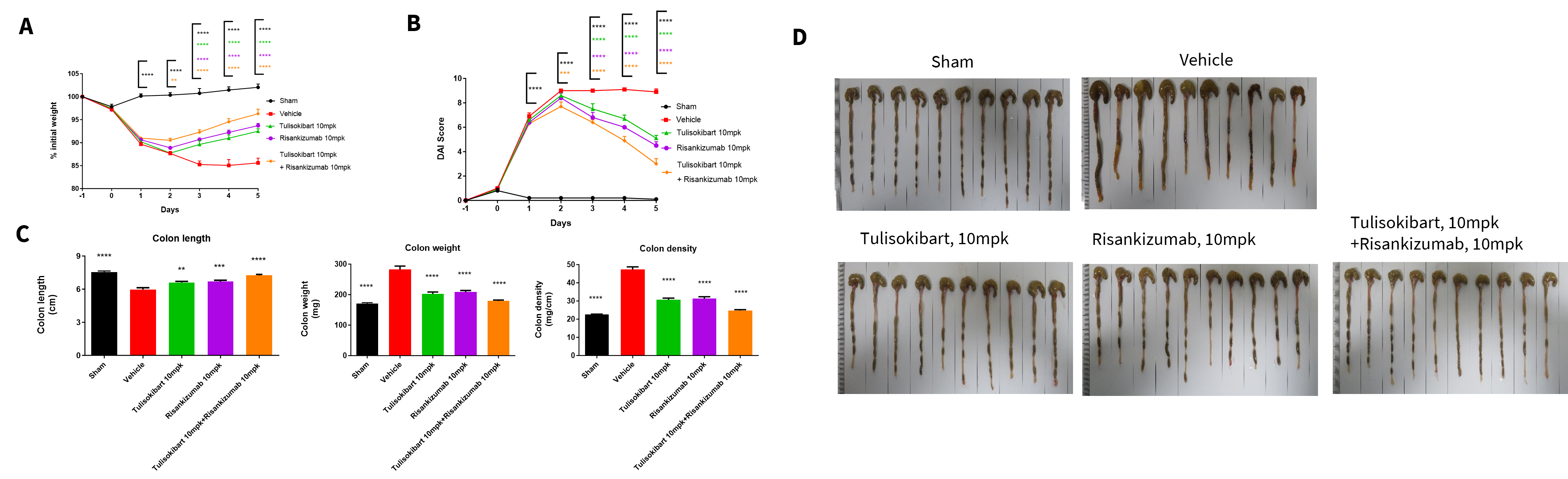
The therapeutic efficacy of anti-human TL1A and anti-human IL23p19 antibodies on the TNBS-induced acute colitis model in B-hTL1A/hIL23A/hIL12B mice. TNBS solution was instilled into the colon lumen of B-hTL1A/hIL23A/hIL12B mice (female, 8-10 weeks-old, n=8). The control group (Sham) received intrarectal injections of 50% ethanol. The treatment groups received anti-human TL1A antibody Tulisokibart (10 mpk, provided by WuXi AppTec), anti-human IL23p19 antibody Risankizumab (10 mpk, provided by WuXi AppTec) alone or in combination. (A) Body weight change. (B) DAI score. (C) Colon Index. (D) Colon photo. An acute colitis disease model induced by TNBS was established in B-hTL1A/hIL23A/hIL12B mice, and administration of anti-human TL1A antibody Tulisokibart and anti-human IL23p19 antibody Risankizumab effectively improved TNBS-induced acute colitis, and their combination provided better efficacy. Values are expressed as mean ± SEM. *p<0.05, **p<0.01, ***p<0.001, ****p<0.0001, versus Vehicle, ANOVA.
Note: This experiment was conducted by WuXi AppTec using B-hTL1A/hIL23A/hIL12B mice.
- Tulisokibart and Risankizumab treatment reduced inflammatory infiltration, epithelial damage and fibrotic progression in colon tissue.
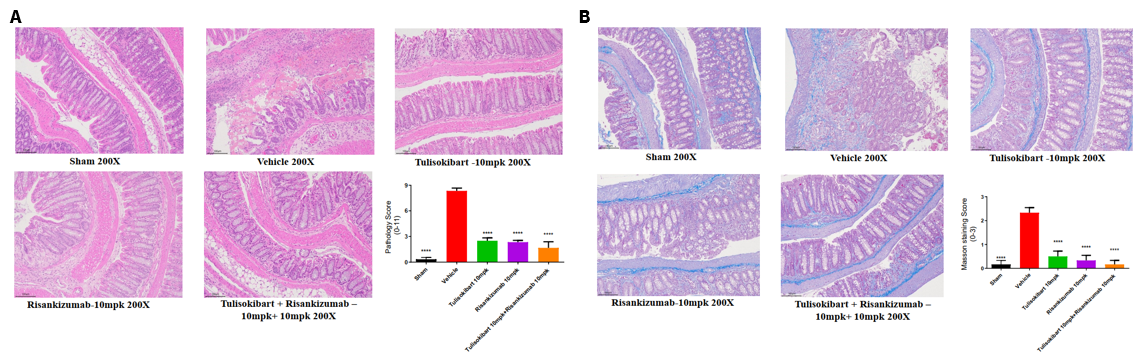
H&E staining and Masson staining on the TNBS-induced acute colitis model in B-hTL1A/hIL23A/hIL12B mice. TNBS solution was instilled into the colon lumen of B-hTL1A/hIL23A/hIL12B mice (female, 8-10 weeks-old, n=8). The control group (Sham) received intrarectal injections of 50% ethanol. The treatment groups received anti-human TL1A antibody Tulisokibart (10 mpk, provided by WuXi AppTec), anti-human IL23p19 antibody Risankizumab (10 mpk, provided by WuXi AppTec) alone or in combination. (A) Pathological score. (B) Masson staining score. An acute colitis disease model induced by TNBS was established in B-hTL1A/hIL23A/hIL12B mice, and administration of anti-human TL1A antibody Tulisokibart and anti-human IL23p19 antibody Risankizumab effectively ameliorated colonic pathological damage and fibrotic progression in TNBS-induced acute colitis mice, and their combination provided better efficacy. Values are expressed as mean ± SEM. *p<0.05, **p<0.01, ***p<0.001, ****p<0.0001, versus Vehicle, ANOVA.
Note: This experiment was conducted by WuXi AppTec using B-hTL1A/hIL23A/hIL12B mice.
- Tulisokibart and Risankizumab treatment reduced the production of inflammatory cytokines.
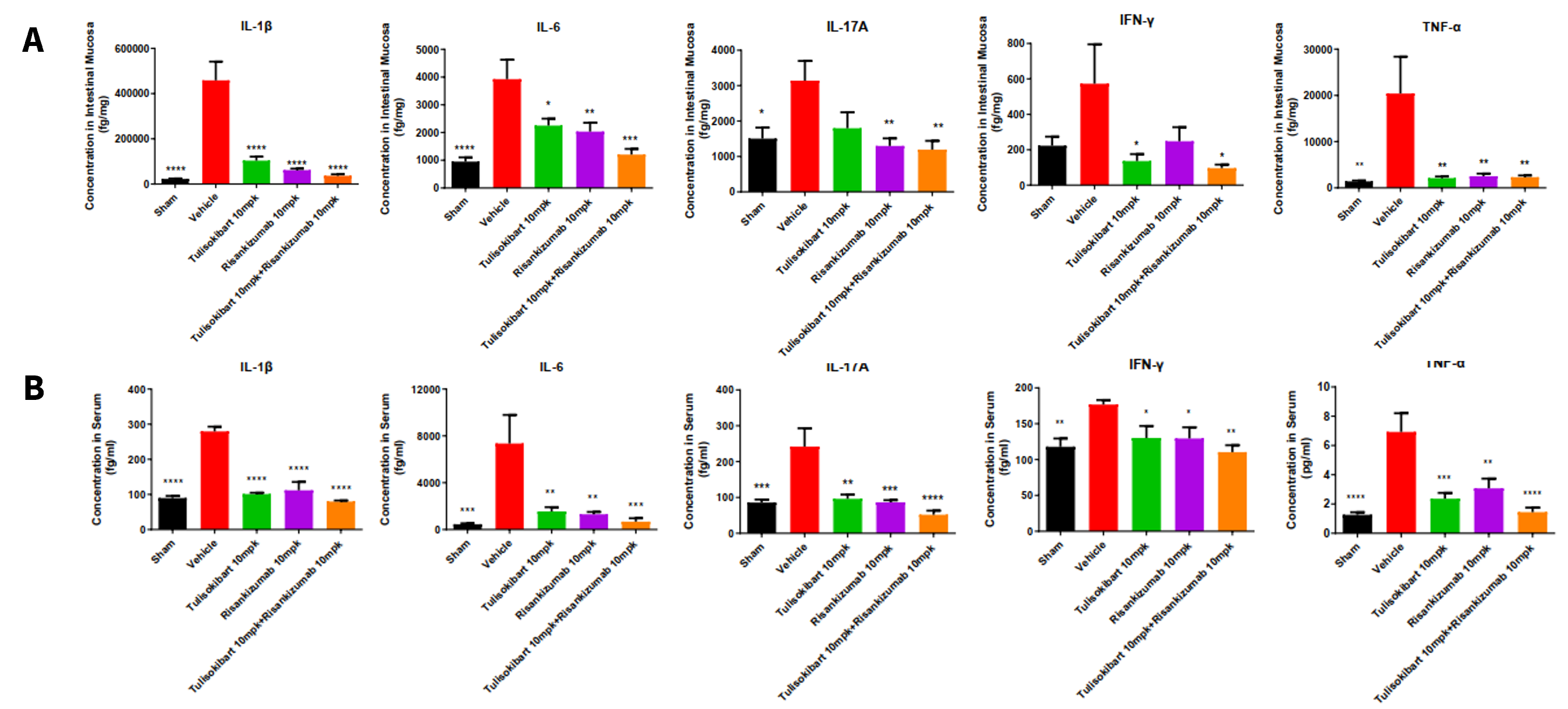
Analysis of inflammatory cytokines on the TNBS-induced acute colitis model in B-hTL1A/hIL23A/hIL12B mice. TNBS solution was instilled into the colon lumen of B-hTL1A/hIL23A/hIL12B mice (female, 8-10 weeks-old, n=8). The control group (Sham) received intrarectal injections of 50% ethanol. The treatment groups received anti-human TL1A antibody Tulisokibart (10 mpk, provided by WuXi AppTec), anti-human IL23p19 antibody Risankizumab (10 mpk, provided by WuXi AppTec) alone or in combination. (A) The concentrations of IL-1β, IL-6, IL-17A, IFN-γ, TNF-α in intestinal mucosa. (B) The concentrations of IL-1β, IL-6, IL-17A, IFN-γ, TNF-α in serum. Administration of anti-human TL1A antibody Tulisokibart and anti-human IL23p19 antibody Risankizumab markedly reduced the production of inflammatory cytokines in TNBS-induced acute colitis mice, and their combination provided better efficacy. The results indicate that B-hTL1A/hIL23A/hIL12B mice are a powerful tool for evalsuating in vivo efficacy of the combination of anti-human TL1A antibody and anti-human IL23p19 antibody. Values are expressed as mean ± SEM. *p<0.05, **p<0.01, ***p<0.001, ****p<0.0001, versus Vehicle, ANOVA.
Note: This experiment was conducted by WuXi AppTec using B-hTL1A/hIL23A/hIL12B mice.
Chronic Model of TNBS-Induced Colitis
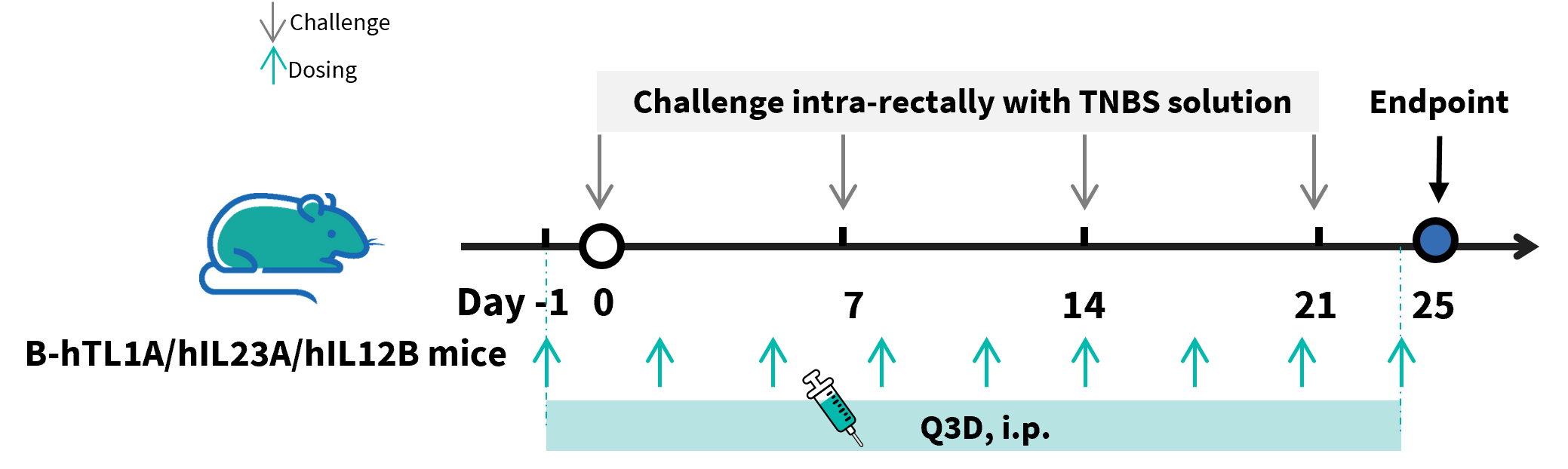
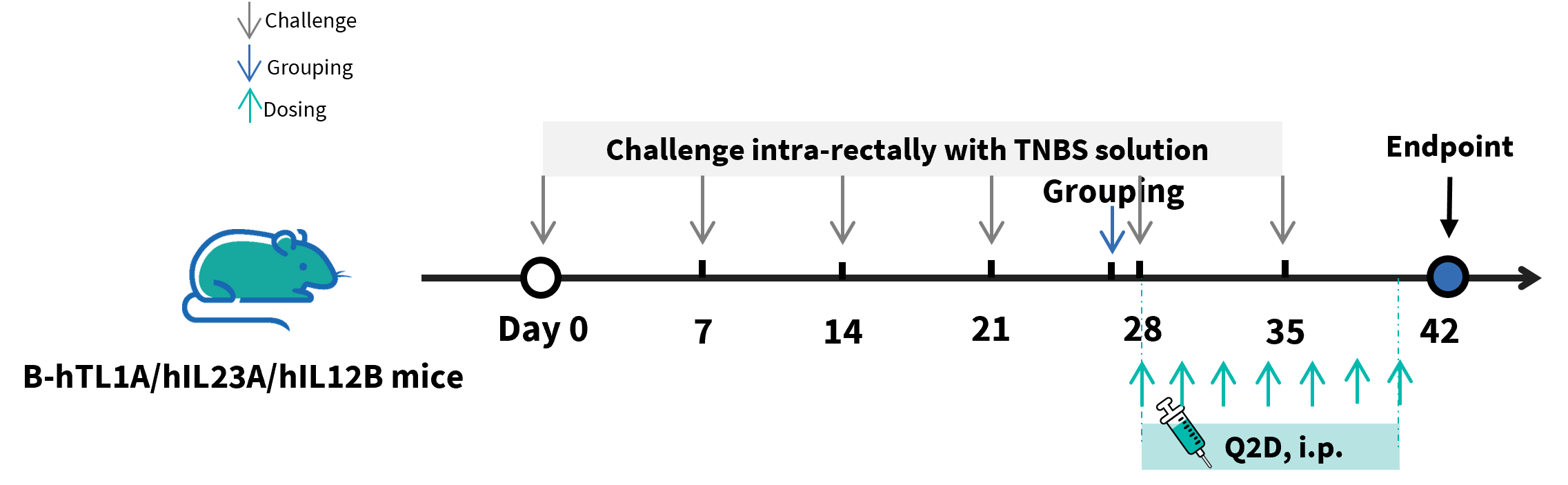
Experimental schedule for TNBS induced chronic colitis and in vivo efficacy of anti-TL1A and anti-IL23 antibodies in B-hTL1A/hIL23A/hIL12B mice. TNBS solution was instilled into the colon lumen of B-hTL1A/hIL23A/hIL12B mice on day0, day7, day14, and day21. The control group (Sham) received intrarectal injections of PBS. The treatment groups received anti-TL1A antibody RVT-3101 (8 mpk, provided by WuXi AppTec), anti-human TL1A antibody TEV-48574 (20 mpk, provided by WuXi AppTec), anti-human IL23p19 antibody Risankizumab (8 mpk, provided by WuXi AppTec) alone or in combination. This animal model can be used to evalsuate the research of anti-fibrotic IBD drugs.
Note: This experiment was conducted by WuXi AppTec using B-hTL1A/hIL23A/hIL12B mice.
In Vivo Efficacy of Anti-TL1A and anti-Human IL23p19 Antibodies in a TNBS Induced Chronic Colitis
- Anti-TL1A and anti-Human IL23p19 antibodies treatment efficiently improved TNBS-induced chronic colitis
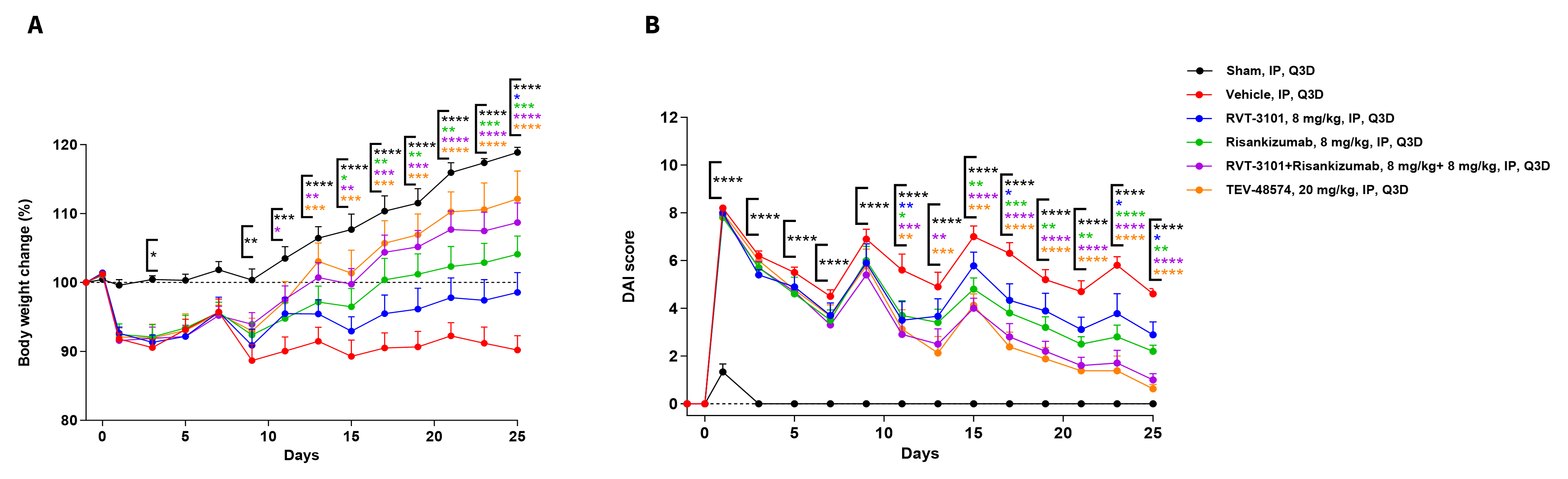
The therapeutic efficacy of anti-human TL1A and anti-human IL23p19 antibodies on the TNBS-induced chronic colitis model in B-hTL1A/hIL23A/hIL12B mice. TNBS solution was instilled into the colon lumen of B-hTL1A/hIL23A/hIL12B mice on day0, day7, day14, and day21. The control group (Sham) received intrarectal injections of PBS. The treatment groups received anti-TL1A antibody RVT-3101 (8 mpk, provided by WuXi AppTec), anti-human TL1A antibody TEV-48574 (20 mpk, provided by WuXi AppTec), anti-human IL23p19 antibody Risankizumab (8 mpk, provided by WuXi AppTec) alone or in combination. (A) Body weight change. (B) DAI score. A chronic colitis disease model induced by TNBS was established in B-hTL1A/hIL23A/hIL12B mice, and administration of anti-TL1A antibodies RVT-3101 and TEV-48574, and anti-human IL23p19 antibody Risankizumab effectively improved TNBS-induced chronic colitis, and combination therapy with RVT-3101 and Risankizumab provided better efficacy. Values are expressed as mean ± SEM. *p<0.05, **p<0.01, ***p<0.001, ****p<0.0001, versus Vehicle, ANOVA.
Note: This experiment was conducted by WuXi AppTec using B-hTL1A/hIL23A/hIL12B mice.
- Anti-TL1A and anti-Human IL23p19 antibodies treatment reduced inflammatory infiltration, epithelial damage and fibrotic progression in colon tissue.
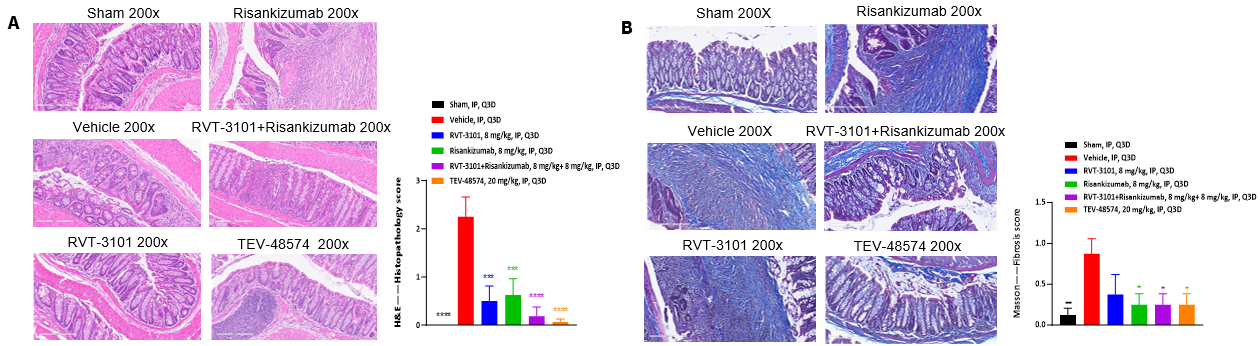
H&E staining and Masson staining on the TNBS-induced chronic colitis model in B-hTL1A/hIL23A/hIL12B mice. TNBS solution was instilled into the colon lumen of B-hTL1A/hIL23A/hIL12B mice on day0, day7, day14, and day21. The control group (Sham) received intrarectal injections of PBS. The treatment groups received anti-TL1A antibody RVT-3101 (8 mpk, provided by WuXi AppTec), anti-human TL1A antibody TEV-48574 (20 mpk, provided by WuXi AppTec), anti-human IL23p19 antibody Risankizumab (8 mpk, provided by WuXi AppTec) alone or in combination. (A) Pathological score. (B) Masson staining score. A chronic colitis disease model induced by TNBS was established in B-hTL1A/hIL23A/hIL12B mice, and administration of anti-TL1A antibodies RVT-3101 and TEV-48574, and anti-human IL23p19 antibody Risankizumab effectively ameliorated colonic pathological damage and fibrotic progression. Values are expressed as mean ± SEM. *p<0.05, **p<0.01, ***p<0.001, ****p<0.0001, versus Vehicle, ANOVA.
Note: This experiment was conducted by WuXi AppTec using B-hTL1A/hIL23A/hIL12B mice.
- Anti-TL1A antibodies treatment reduced COL1A1 expression in smooth muscular tissue
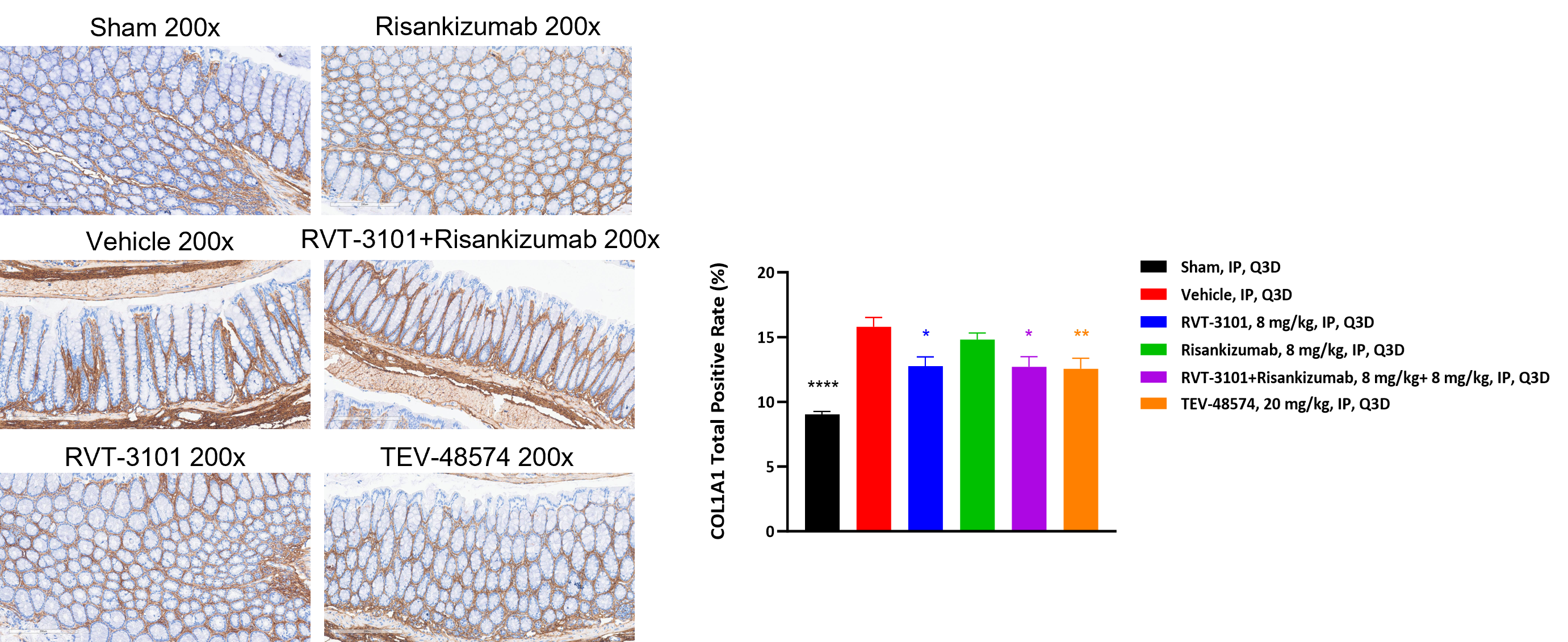
COL1A1 expression analysis on the TNBS-induced chronic colitis model in B-hTL1A/hIL23A/hIL12B mice by Immunohistochemistry (IHC). TNBS solution was instilled into the colon lumen of B-hTL1A/hIL23A/hIL12B mice on day0, day7, day14, and day21. The control group (Sham) received intrarectal injections of PBS. The treatment groups received anti-TL1A antibody RVT-3101 (8 mpk, provided by WuXi AppTec), anti-human TL1A antibody TEV-48574 (20 mpk, provided by WuXi AppTec), anti-human IL23p19 antibody Risankizumab (8 mpk, provided by WuXi AppTec) alone or in combination. A chronic colitis disease model induced by TNBS was established in B-hTL1A/hIL23A/hIL12B mice, and administration of anti-TL1A antibodies RVT-3101 and TEV-48574 effectively reduced COL1A1 expression in smooth muscular tissue. Values are expressed as mean ± SEM. *p<0.05, **p<0.01, ***p<0.001, ****p<0.0001, versus Vehicle, ANOVA.
Note: This experiment was conducted by WuXi AppTec using B-hTL1A/hIL23A/hIL12B mice.
- Targeting the TL1A/IL-23 pathway synergistically improves the progression of intestinal diseases through a triple mechanism.
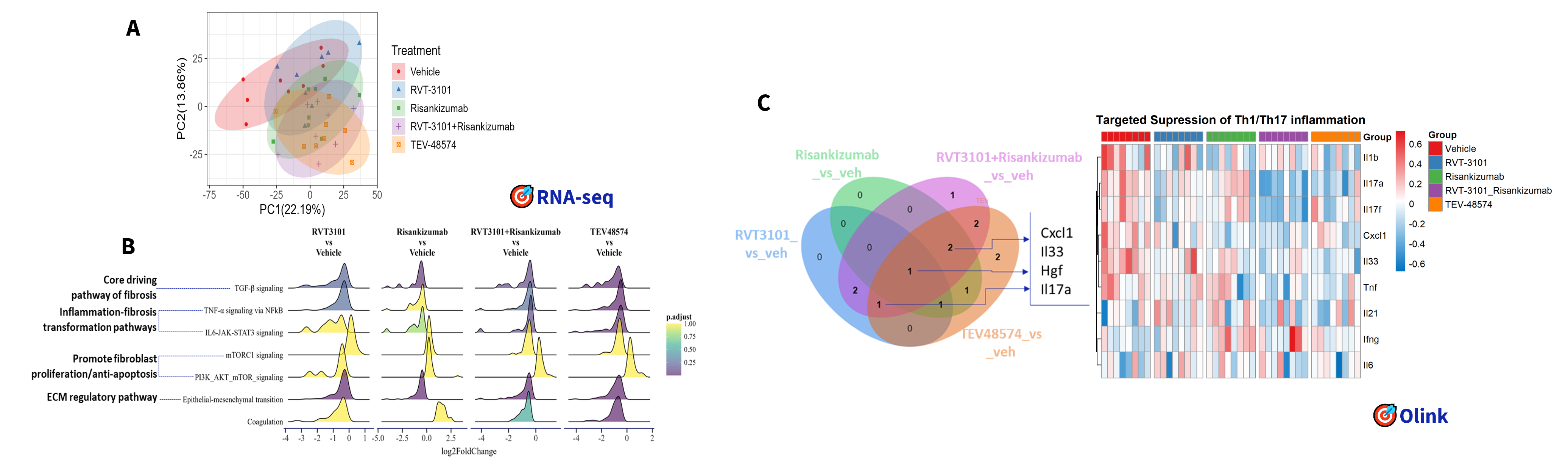
Anti-TL1A and anti-human IL23 antibodies reversed fibrosis decoded by integrating RNA-seq and Olink analysis on the TNBS-induced chronic colitis model in B-hTL1A/hIL23A/hIL12B mice. Colon tissues were collected at the study endpoint and analyzed by RNA-seq and Olink analysis. (A) PCA analysis. The treatment groups (mono- and combo-therapies) significantly separated from the vehicle group, confirming that drugs targeting the TL1A/IL-23 pathway systemically restructured the transcriptomic expression of the intestine. (B) GSEA analysis. The treatment groups (mono- and combo-therapies) significantly downregulated the fibrosis pathways (such as the TGF-β signaling pathway) and the inflammatory pathways (such as TNF-α, IL-6 signaling), achieving a "fibrosis-inhibition + anti-inflammatory" dual reversal at the genetic level. (C) Proteomics research. The TL1A/IL-23 targeted therapy significantly inhibits the key factors of the intestinal Th1/Th17 pathway (such as IL-17a, IFN-γ, TNF), precisely blocking the immune storm.
Note: This experiment was conducted by WuXi AppTec using B-hTL1A/hIL23A/hIL12B mice.
Chronic Model of TNBS-Induced Colitis
Experimental schedule for TNBS induced chronic colitis and in vivo efficacy of anti-TL1A antibodies in B-hTL1A/hIL23A/hIL12B mice. TNBS solution was instilled into the colon lumen of B-hTL1A/hIL23A/hIL12B mice on day0, day7, day14, day21, day28, and day35. The mice were grouped on Day 27, the control group (Sham) received intrarectal injections of PBS. The treatment groups received anti-TL1A antibody RVT-3101 (20 mpk, provided by WuXi AppTec) and anti-human TL1A antibody TEV-48574 (20 mpk, provided by WuXi AppTec). This animal model can be used to evalsuate the research of anti-fibrotic IBD drugs.
Note: This experiment was conducted by WuXi AppTec using B-hTL1A/hIL23A/hIL12B mice.
In Vivo Efficacy of Anti-TL1A Antibodies in a TNBS Induced Chronic Colitis
- Anti-TL1A antibodies treatment efficiently improved TNBS-induced chronic colitis.
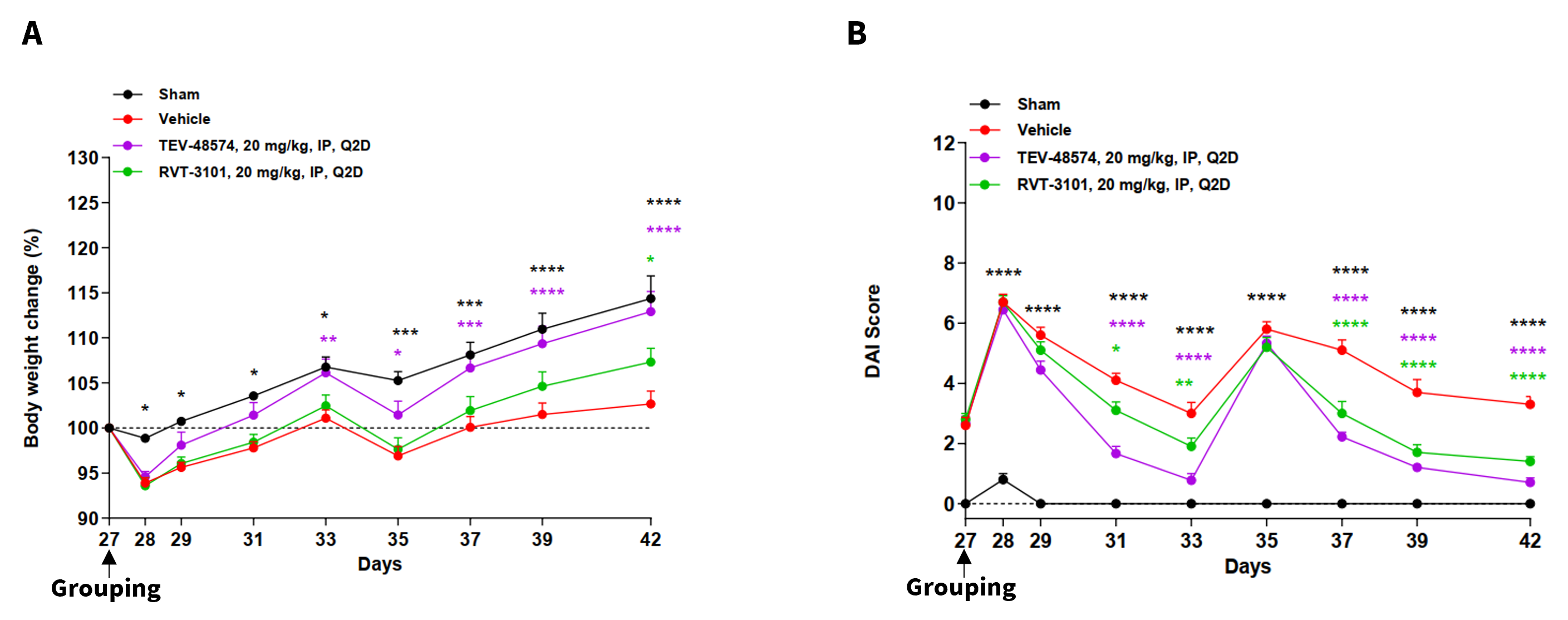
The therapeutic efficacy of anti-human TL1A and anti-human IL23p19 antibodies on the TNBS-induced chronic colitis model in B-hTL1A/hIL23A/hIL12B mice. TNBS solution was instilled into the colon lumen of B-hTL1A/hIL23A/hIL12B mice on day0, day7, day14, day21, day28, and day35. The mice were grouped on Day 27, the control group (Sham) received intrarectal injections of PBS. The treatment groups received anti-TL1A antibody RVT-3101 (20 mpk, provided by WuXi AppTec) and anti-human TL1A antibody TEV-48574 (20 mpk, provided by WuXi AppTec). (A) Body weight change. (B) DAI score. A chronic colitis disease model induced by TNBS was established in B-hTL1A/hIL23A/hIL12B mice, and administration of anti-TL1A antibodies RVT-3101 and TEV-48574 effectively improved TNBS-induced chronic colitis. Values are expressed as mean ± SEM. *p<0.05, **p<0.01, ***p<0.001, ****p<0.0001, versus Vehicle, ANOVA.
Note: This experiment was conducted by WuXi AppTec using B-hTL1A/hIL23A/hIL12B mice.
* When publishing results obtained using this animal model, please acknowledge the source as follows: The animal model [B-hTL1A/hIL23A/hIL12B mice] (Cat# 113038) was purchased from Biocytogen.