B-hTNFA/hTNFR2/hTNFR1 mice

C57BL/6-Tnftm1(TNF)Bcgen Tnfrsf1btm1(TNFRSF1B)Bcgen Tnfrsf1atm1(TNFRSF1A)Bcgen/Bcgen • 131706

B-hTNFA/hTNFR2/hTNFR1 mice

Catalog Number: 131706
Strain Name: C57BL/6-Tnftm1(TNF)Bcgen Tnfrsf1btm1(TNFRSF1B)Bcgen Tnfrsf1atm1(TNFRSF1A)Bcgen/Bcgen
Strain Background: C57BL/6
NCBI gene ID: 7124,7133,7132 (Human)
---
可提供授权方案
B-hTNFA/hTNFR2/hTNFR1 mice

在此页面上

  • Description
  • Targeting strategy
  • Phenotypic analysis
  • Efficacy
  • FAQ section

海报

查看全部

    发表文章

      Description
      • Tumor necrosis factor alpha (TNFα) is a central inflammatory cytokine that activates immune responses through TNFR1 and TNFR2 signaling pathways.
      • TNFR1 and TNFR2 regulate overlapping but distinct biology in inflammation, autoimmunity, cancer, tissue injury, and immune-cell activation.
      • B-hTNFA/hTNFR2/hTNFR1 mice are triple target-humanized mice carrying human TNFA, humanized TNFR2, and humanized TNFR1 in a C57BL/6 background.
      • B-hTNFA/hTNFR2/hTNFR1 mice enable in vivo evalsuation of anti-human TNFα antibodies, anti-human TNFR2 antibodies, TNFR1/TNFR2 pathway modulators, and TNFA-targeted therapies.
      • Human TNFα, TNFR1, and TNFR2 expression, immune-cell profiling, LPS-induced cytokine response, MC38 tumor efficacy, and collagen-induced arthritis efficacy have been validated in this model.

      Key Advantages

      • Human TNFα expression validated by ELISA after LPS stimulation
      • Human TNFR1 and human TNFR2 expression validated by flow cytometry in splenocytes
      • Normal spleen and blood leukocyte subpopulation profiles compared with wild-type mice
      • Supports anti-human TNFα antibody efficacy in LPS response and CIA arthritis models
      • Supports anti-human TNFR2 antibody evalsuation in MC38 tumor-bearing B-hTNFA/hTNFR2/hTNFR1 mice

      Validation

      • TNFα Protein Validation: Human TNFα was detectable in homozygous B-hTNFA/hTNFR2/hTNFR1 mice after LPS stimulation, while mouse TNFα was detected in wild-type mice.
      • TNFR1 Protein Validation: Human TNFR1 was detectable in homozygous B-hTNFA/hTNFR2/hTNFR1 mice by flow cytometry, while mouse TNFR1 was detected in wild-type mice.
      • TNFR2 Protein Validation: Human TNFR2 was detectable in homozygous B-hTNFA/hTNFR2/hTNFR1 mice after anti-CD3ε stimulation, while mouse TNFR2 was detected in wild-type mice.
      • Phenotypic Validation: Spleen and blood leukocyte subpopulations, hematology, and serum biochemistry were characterized in B-hTNFA/hTNFR2/hTNFR1 mice.
      • Efficacy Validation: Adalimumab and anti-human TNFR2 antibodies demonstrated in vivo activity in LPS response, MC38 tumor, and CIA arthritis models.

      Application

      • Anti-human TNFα antibody efficacy evalsuation
      • Anti-human TNFR2 antibody and TNFR2 agonist/antagonist studies
      • TNFR1/TNFR2 pathway pharmacology and mechanism-of-action research
      • LPS-induced inflammatory cytokine response studies
      • MC38 syngeneic tumor efficacy studies
      • Collagen-induced arthritis (CIA) and rheumatoid arthritis drug development
      Targeting strategy

      In B-hTNFA/hTNFR2/hTNFR1 mice, the targeted mouse Tnfα whole genomic sequence, including 5' UTR, 3' UTR, and coding region, was replaced by the corresponding human TNFα whole genomic sequence.
      For receptor humanization, mouse Tnfr2 exons 2-6 encoding the extracellular domain were replaced with human TNFR2 exons 2-6, and mouse Tnfr1 exons 2-6 encoding the extracellular domain were replaced with human TNFR1 exons 2-6. This targeting strategy enables B-hTNFA/hTNFR2/hTNFR1 mice to express human TNFα, humanized TNFR2, and humanized TNFR1 for translational TNF pathway studies.

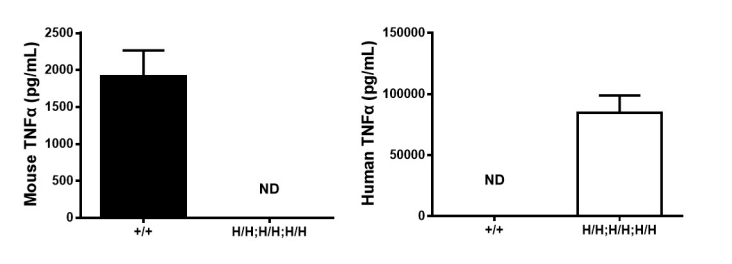
      Protein Expression Analysis of Human TNFα in B-hTNFA/hTNFR2/hTNFR1 Mice

      Strain-specific TNFA protein expression was analyzed in wild-type mice and B-hTNFA/hTNFR2/hTNFR1 mice by ELISA.
      Serum was collected from wild-type mice (+/+) and homozygous B-hTNFA/hTNFR2/hTNFR1 mice (H/H;H/H;H/H) after in vivo LPS stimulation and analyzed with species-specific TNFα ELISA kits. Mouse TNFα was detectable in wild-type mice, while human TNFα was detectable in homozygous B-hTNFA/hTNFR2/hTNFR1 mice but not in wild-type controls. Values are expressed as mean ± SEM. ND: not detectable.

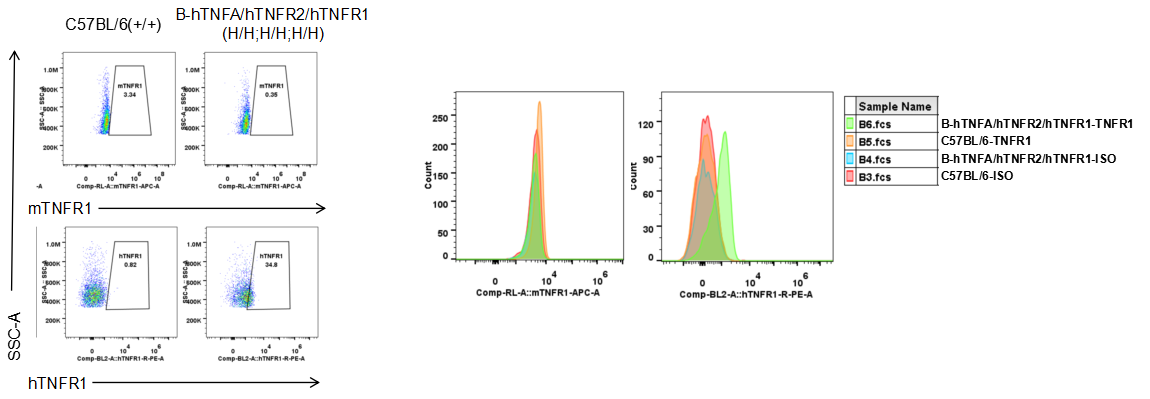
      Protein Expression Analysis of TNFR1 in B-hTNFA/hTNFR2/hTNFR1 Mice
      Strain-specific TNFR1 protein expression was analyzed in homozygous B-hTNFA/hTNFR2/hTNFR1 mice by flow cytometry.
      Splenocytes were collected from wild-type mice (+/+) and homozygous B-hTNFA /hTNFR2/hTNFR1 mice (H/H;H/H;H/H), then stained with species-specific anti-TNFR1 antibodies. Mouse TNFR1 was detectable in wild-type mice. Human TNFR1 was detectable in homozygous B-hTNFA/hTNFR2/hTNFR1 mice but not in wild-type controls.

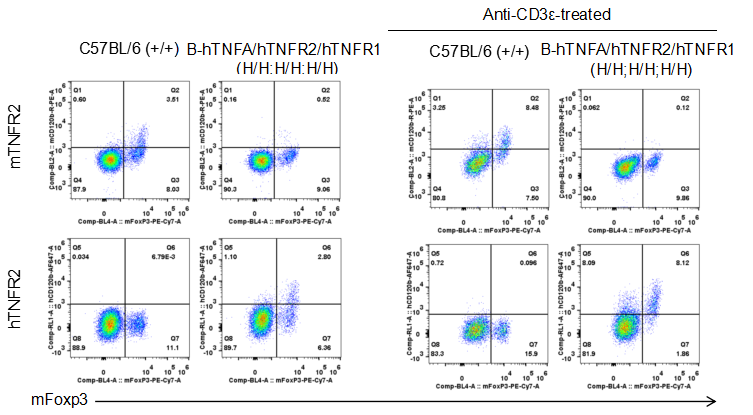
      Protein Expression Analysis of TNFR2 in B-hTNFA/hTNFR2/hTNFR1 Mice
      Strain-specific TNFR2 protein expression was analyzed in homozygous B-hTNFA/hTNFR2/hTNFR1 mice by flow cytometry.
      Splenocytes were collected from wild-type mice (+/+) and homozygous B-hTNFA/hTNFR2/hTNFR1 mice (H/H;H/H;H/H), stimulated with anti-CD3ε in vivo, and stained with species-specific anti-TNFR2 antibodies. Mouse TNFR2 was detectable in wild-type mice. Human TNFR2 was detectable in homozygous B-hTNFA/hTNFR2/hTNFR1 mice but not in wild-type controls.

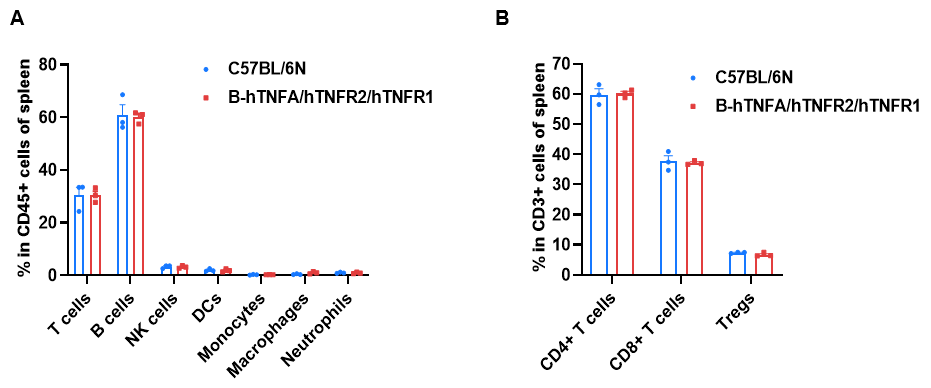
      Frequency of Leukocyte Subpopulations in Spleen

      Spleen leukocyte subpopulations were analyzed by flow cytometry in B-hTNFA/hTNFR2/hTNFR1 mice.
      Splenocytes were isolated from wild-type C57BL/6N mice and homozygous B-hTNFA/hTNFR2/hTNFR1 mice (female, 7-week-old, n=3). Flow cytometry was used to evalsuate T cells, B cells, NK cells, dendritic cells, monocytes, macrophages, neutrophils, CD4+ T cells, CD8+ T cells, and Tregs. The frequencies of these leukocyte subpopulations in B-hTNFA/hTNFR2/hTNFR1 mice were similar to those in C57BL/6N mice, indicating that TNFα, TNFR2, and TNFR1 humanization does not alter spleen immune-cell distribution. Values are expressed as mean ± SEM.

      Frequency of Leukocyte Subpopulations in Blood

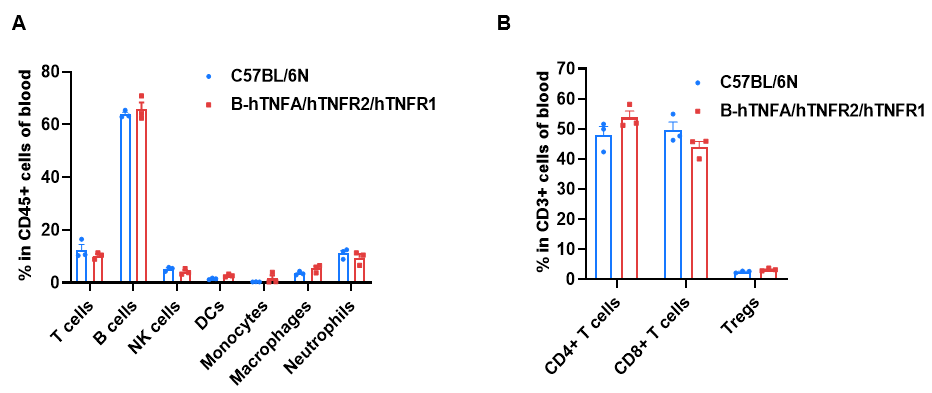
      Blood leukocyte subpopulations were analyzed by flow cytometry in B-hTNFA/hTNFR2/hTNFR1 mice.
      Blood cells were isolated from wild-type C57BL/6N mice and homozygous B-hTNFA/hTNFR2/hTNFR1 mice (female, 7-week-old, n=3). Flow cytometry analysis showed that T cells, B cells, NK cells, dendritic cells, monocytes, macrophages, neutrophils, CD4+ T cells, CD8+ T cells, and Tregs were similar between B-hTNFA/hTNFR2/hTNFR1 mice and C57BL/6N controls. These results support baseline immune comparability after TNFα/TNFR2/TNFR1 humanization. Values are expressed as mean ± SEM.

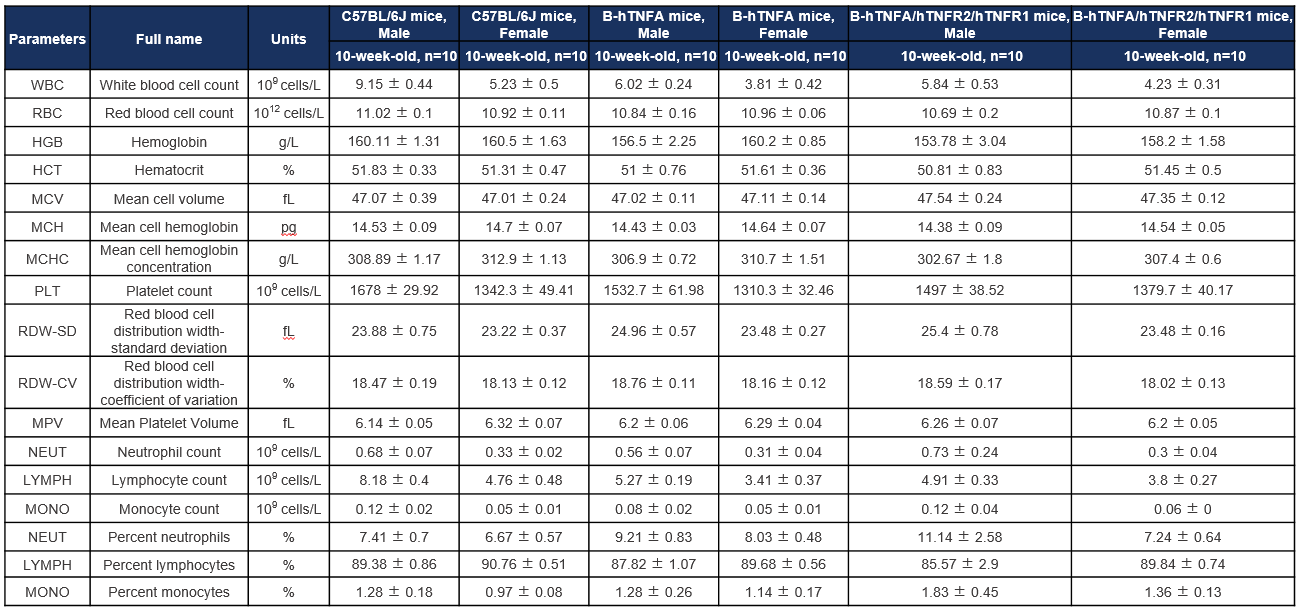
      Hematology Analysis of B-hTNFA/hTNFR2/hTNFR1 Mice

      Complete blood count (CBC) was performed to evalsuate hematological characteristics of B-hTNFA/hTNFR2/hTNFR1 mice.
      Blood samples were collected from wild-type C57BL/6N mice and homozygous B-hTNFA/hTNFR2/hTNFR1 mice for hematology analysis. The measured hematology parameters were comparable between B-hTNFA/hTNFR2/hTNFR1 mice and wild-type controls, supporting normal baseline blood-cell profiles after TNFα, TNFR2, and TNFR1 humanization.

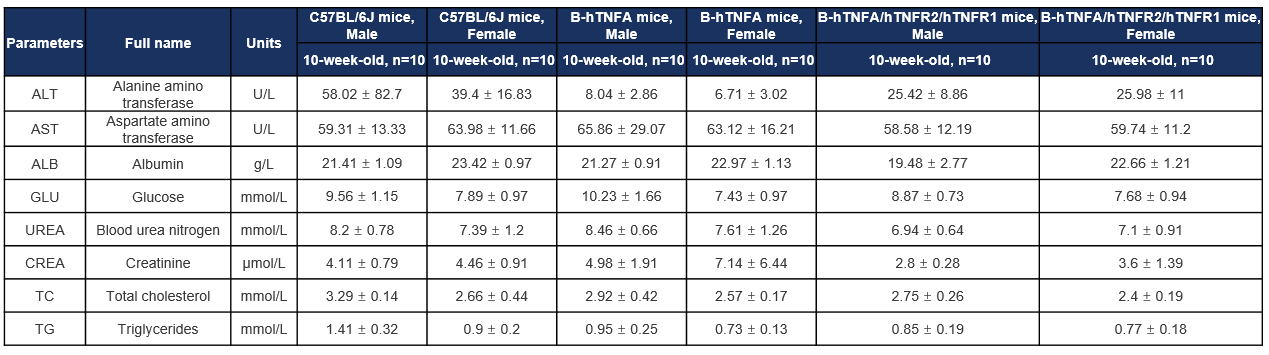
      Biochemistry Analysis of B-hTNFA/hTNFR2/hTNFR1 Mice

      Serum biochemistry analysis was performed to characterize baseline clinical chemistry in B-hTNFA/hTNFR2/hTNFR1 mice.
      Serum samples were collected from wild-type C57BL/6N mice and homozygous B-hTNFA/hTNFR2/hTNFR1 mice. Blood chemistry parameters were comparable between B-hTNFA/hTNFR2/hTNFR1 mice and wild-type controls, indicating that TNFα/TNFR2/TNFR1 humanization does not cause overt baseline serum biochemistry abnormalities.

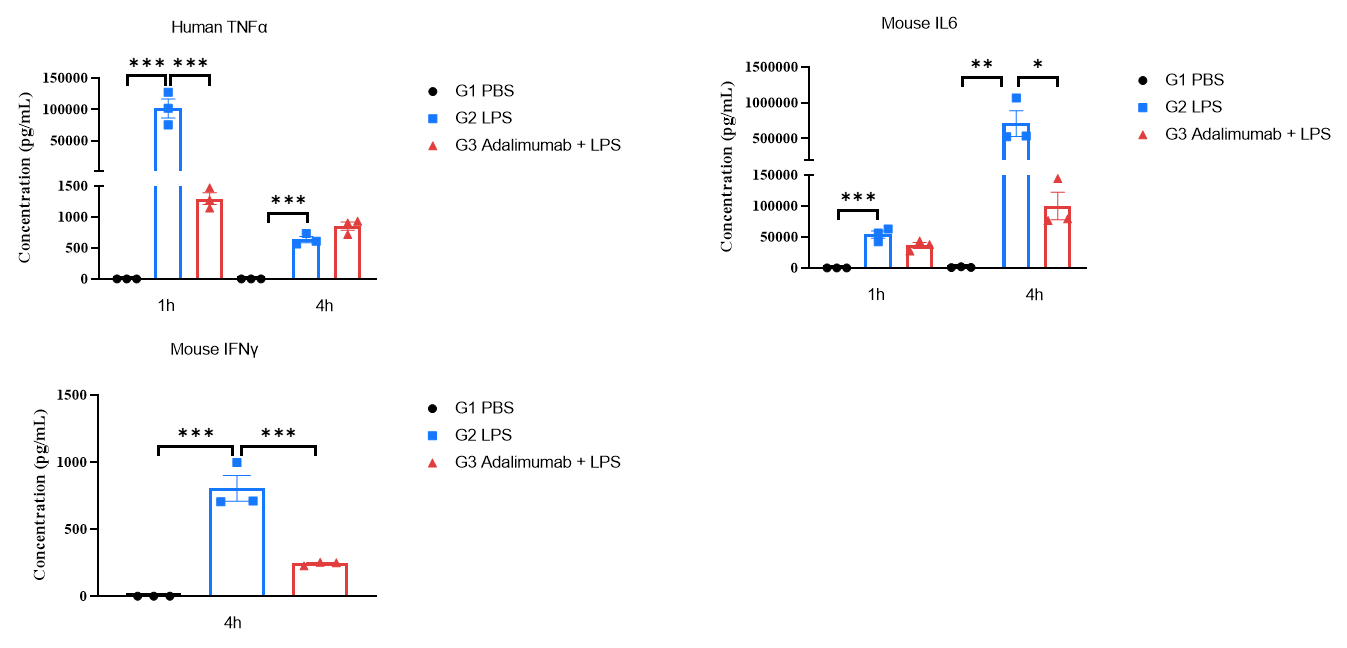
      In Vivo Efficacy of Anti-Human TNFα Antibody in LPS-Induced Response

      Adalimumab activity was evalsuated in an LPS-induced inflammatory response model using B-hTNFA/hTNFR2/hTNFR1 mice.
      Homozygous B-hTNFA/hTNFR2/hTNFR1 mice received PBS or adalimumab (i.v., in-house) two hours before LPS injection (i.p.). Serum was collected one hour and four hours after LPS injection, and human TNFα, mouse IL6, and mouse IFNλ were measured by ELISA. LPS significantly increased human TNFα at one and four hours, mouse IL6 at one and four hours, and mouse IFNλ at four hours. Adalimumab significantly decreased human TNFα at one hour and reduced downstream mouse IL6 and mouse IFNλ at four hours, indicating inhibition of hTNFα-driven activation. Values are expressed as mean ± SEM. Significance was determined by one-way ANOVA. *p < 0.05, **p < 0.01, ***p < 0.001.

      In Vivo Efficacy of Anti-Human TNFR2 Antibody in MC38 Tumor-bearing B-hTNFA/hTNFR2/hTNFR1 Mice

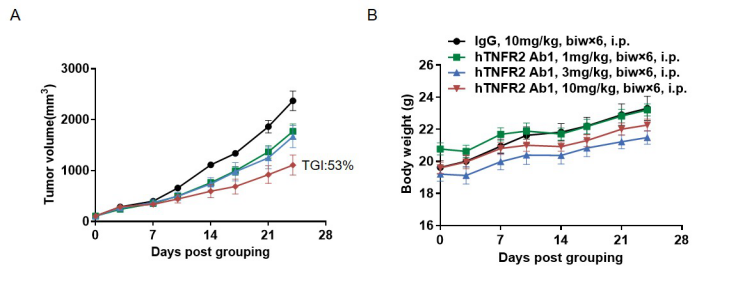
      Anti-human TNFR2 antibody efficacy was evalsuated in MC38 tumor-bearing B-hTNFA/hTNFR2/hTNFR1 mice.
      Murine colon cancer MC38 cells were subcutaneously implanted into homozygous B-hTNFA/hTNFR2/hTNFR1 mice (female, 8-week-old, n=6). Mice were grouped according to body weight differences and treated with anti-TNFR2 Ab1 provided by a client according to the indicated doses and schedules. Anti-human TNFR2 antibodies inhibited MC38 tumor growth in a dose-dependent manner, while body weight was monitored during treatment. These data support B-hTNFA/hTNFR2/hTNFR1 mice as a preclinical model for in vivo evalsuation of anti-human TNFR2 antibodies. Values are expressed as mean ± SEM.

      CIA Mouse Model induced in B-hTNFA/hTNFR2/hTNFR1 Mice

      Establishment of CIA Mouse Model

      A collagen-induced arthritis (CIA) mouse model was established in B-hTNFA/hTNFR2/hTNFR1 mice.
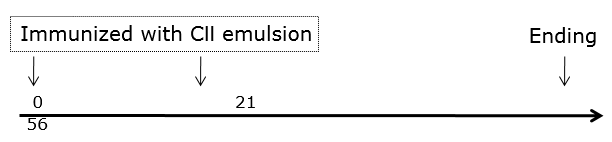
      B-hTNFA/hTNFR2/hTNFR1 mice (10-week-old, 6 males and 10 females) and C57BL/6 mice (10-week-old) were used for CIA model development. Collagen type II (CII) emulsion was used as the modeling reagent. Mice were sensitized on Day 0 and challenged on Day 21 to induce arthritis, providing a TNFα/TNFR2/TNFR1 humanized inflammatory disease model for rheumatoid arthritis research.

      Establishment of CIA Mouse Model in B-hTNFA/hTNFR2/hTNFR1 Mice

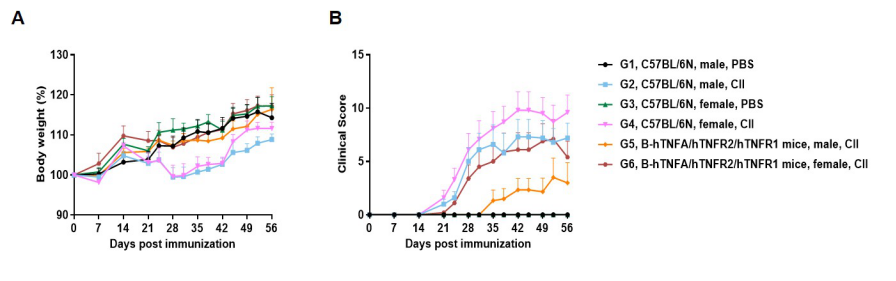
      Collagen-induced arthritis was induced in B-hTNFA/hTNFR2/hTNFR1 mice and C57BL/6 mice using CII emulsion.
      Mouse body weight change and clinical arthritis score were monitored after CIA induction. The clinical score of B-hTNFA/hTNFR2/hTNFR1 mice was significantly increased, demonstrating successful arthritis model establishment. These data support the use of B-hTNFA/hTNFR2/hTNFR1 mice for TNFα-targeted therapy evalsuation in an autoimmune arthritis setting.

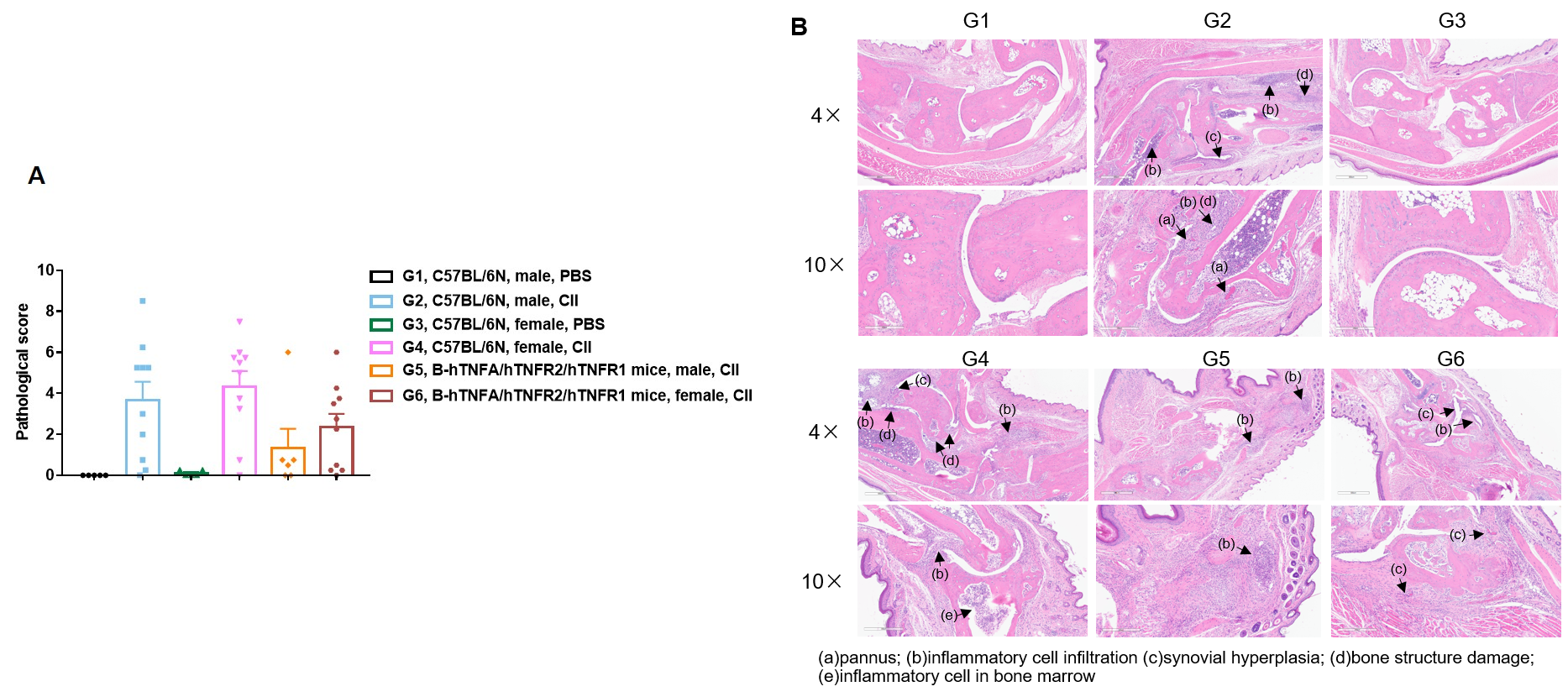
      Pathological analysis was performed after CIA model establishment in B-hTNFA/hTNFR2/hTNFR1 mice and C57BL/6 mice.
      Joint pathology was evalsuated by pathological scoring and H&E staining. In the CIA model group, subcutaneous mixed inflammatory-cell infiltration, periarticular stenosis, articular cartilage destruction, bone tissue destruction, and other arthritis-associated lesions were observed in all or part of the limb joints. These pathological findings confirmed successful establishment of the CIA arthritis model in B-hTNFA/hTNFR2/hTNFR1 mice.

      Efficacy of Anti-Human TNFα Antibody in CIA-induced B-hTNFA/hTNFR2/hTNFR1 Model

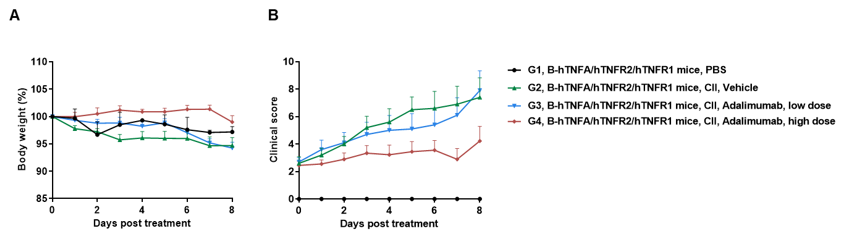
      Adalimumab efficacy was evalsuated in B-hTNFA/hTNFR2/hTNFR1 mice with collagen-induced arthritis.
      CIA was induced by subcutaneous injection of CII emulsion on Day 0 and Day 21 in female B-hTNFA/hTNFR2/hTNFR1 mice (n=9-10/group). Mice were grouped when inflammation appeared, defined as clinical score >1 or continuous score =1, and treated intraperitoneally with different doses of anti-human TNFα antibody adalimumab (in-house). Body weight change and clinical score were evalsuated daily. Total clinical score increased in the model groups, confirming arthritis establishment, while adalimumab treatment produced a dose-dependent reduction in clinical score. These results support B-hTNFA/hTNFR2/hTNFR1 mice as a CIA model for in vivo anti-human TNFα antibody evalsuation.

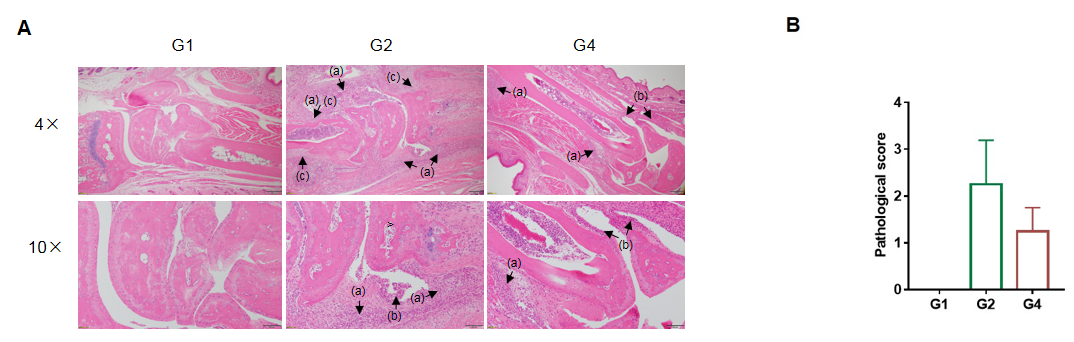
      Histopathological examination was performed to evalsuate anti-human TNFα antibody efficacy in the CIA model.
      At endpoint, joints from B-hTNFA/hTNFR2/hTNFR1 mice were collected, decalcified, sectioned, and stained with H&E. Inflammatory-cell infiltration, synovial hyperplasia, and bone structure damage were assessed by histopathological scoring. The pathological score of the model group was higher than that of the control group, confirming successful modeling. The pathological score was lower in the adalimumab-treated group than in the model group, indicating therapeutic activity of anti-human TNFα antibody in B-hTNFA/hTNFR2/hTNFR1 CIA mice.

      FAQ section

      Q1: What are B-hTNFA/hTNFR2/hTNFR1 mice?

      B-hTNFA/hTNFR2/hTNFR1 mice are triple gene-humanized mice expressing human TNFα, humanized TNFR2, and humanized TNFR1 in a C57BL/6 background for TNF pathway drug development.

      Q2: Why are TNFα, TNFR1, and TNFR2 important therapeutic targets?

      TNFα signaling through TNFR1 and TNFR2 regulates inflammation, immune activation, autoimmunity, tissue injury, and tumor immunity, making this pathway important for inflammatory disease and oncology therapeutics.

      Q3: How were TNFα, TNFR1, and TNFR2 validated in this model?

      Human TNFα was validated by ELISA after LPS stimulation, while human TNFR1 and human TNFR2 were validated by flow cytometry using species-specific antibodies.

      Q4: Can B-hTNFA/hTNFR2/hTNFR1 mice be used for in vivo antibody efficacy studies?

      Yes. The model supports adalimumab evalsuation in LPS-induced response and CIA arthritis models, and anti-human TNFR2 antibody evalsuation in MC38 tumor-bearing mice.

      Q5: What are the main applications of B-hTNFA/hTNFR2/hTNFR1 mice?

      Applications include anti-human TNFα antibody studies, anti-human TNFR2 antibody research, TNFR1/TNFR2 pathway pharmacology, LPS inflammation models, MC38 tumor studies, and collagen-induced arthritis drug development.

      * When publishing results obtained using this animal model, please acknowledge the source as follows: The animal model [B-hTNFA/hTNFR2/hTNFR1 mice] (Cat# 131706) was purchased from Biocytogen.
      公海赌赌船
      网站地图